

BOOKS
BOOKS FOR
LEARNING & REFLECTION.
This collection includes books that may support a wide range of people, including educators, youth leaders, families/caregivers, community members, and justice system professionals, as they explore restorative justice, restorative justice in education, relational practice, listening, accountability, belonging, justice, and community.
These books may be useful for personal learning, professional learning, staff meetings, family/community conversations, justice system reflection, youth leadership, or opening reflection.
Becoming a Trauma-Informed Restorative Educator: Practical Skills to Change Culture and Behavior
Joe Brummer and Margaret Thorsborne
2026

A practical resource for educators who want to understand and apply trauma-informed restorative practice in everyday school life. Use to support professional learning around relationships, shame, regulation, accountability, and culture change, while keeping the focus on practice, systems, and dignity rather than behaviour management alone.
Walking Together
Elder Dr. Albert D. Marshall and Louise Zimanyi
2023

A gentle introduction to Etuaptmumk (Two-Eyed Seeing) and to respectful, reciprocal relationships with Land, Water, plants, animals, and one another. Use with humility and care, inviting noticing, gratitude, responsibility, and relationship rather than treating it as a stand-alone Indigenous content lesson.
The Four Pivots: Reimagining Justice, Reimagining Ourselves
Shawn A. Ginwright
2022

A reflective resource for thinking about justice, healing, and social change as both personal and collective work. Use with adults or professional learning groups as an invitation to consider how inner work, relationship, rest, possibility, and systems change are connected.
Building a Trauma-Informed Restorative School: Skills and Approaches for Improving Culture and Behavior
Joe Brummer with Margaret Thorsborne
2020

A practical bridge between trauma-informed education and restorative approaches in schools. Use it to support conversations about culture, behaviour, regulation, and repair while being careful not to reduce trauma-informed practice to a set of behaviour strategies.

It’s Trevor Noah: Born a Crime: Stories from a South African Childhood, Adapted for Young Readers
Trevor Noah
2019

A young readers’ memoir that opens conversations about apartheid, racism, identity, family, poverty, humour, resistance, and survival. Use with context so these issues are not treated as distant or resolved, and invite reflection on how systems shape people’s lives.


Emily Included
Kathleen McDonnell
2011

A Canadian non-fiction book about Emily Eaton and her family’s fight for her right to attend school with non-disabled peers. Use to support conversations about disability rights, belonging, accessibility, and inclusion while avoiding inspiration-based or pity-based framing.


The Little Book of Restorative Teaching Tools for Online Learning: Games and Activities for Restorative Justice Practitioners
Kathleen McGoey and Lindsey Pointer
2024

A practical resource for creating more relational, engaging, and participatory online learning spaces. Use it when planning online circles, mentoring sessions, professional learning, or virtual gatherings where connection and care need to be intentionally supported.
The Little Book of Restorative Justice in Education: Fostering Responsibility, Healing, and Hope in Schools
Katherine Evans and dorothy vaandering
2022

A foundational resource for understanding restorative justice in education as more than a response to harm. Use it for staff learning, leadership conversations, and professional learning where readers are ready to think deeply about relationships, accountability, school culture, and systems.
My Indian
Mi'sel Joe and Sheila O'Neill
2021

A work of historical fiction that reclaims the story of Sylvester Joe, the Mi’kmaw guide engaged by William Epps Cormack in 1822. Use thoughtfully by naming the context of the title, centring the Mi’kmaw authors’ act of reclaiming identity and perspective, and inviting reflection on whose stories have been recorded, erased, or retold. A study guide is available to support classroom or group discussion.


How We Roll
Natasha Friend
2018

A young adult novel that can support conversations about identity, appearance, disability, friendship, and belonging. Use with care around illness, body image, and difference, focusing on assumptions, privacy, dignity, and being known beyond one visible part of ourselves.


Lockdown
Walter Dean Meyers
2010

A young adult novel that can support conversations about youth justice, accountability, incarceration, and the systems that shape young people’s lives. Use with care and context, avoiding deficit-based readings of youth who experience criminalization or institutionalization.


Suliewey: The Sequel to My Indian
Mi’sel Joe and Sheila O’Neill
2023

A sequel that continues the story of Sylvester Joe, whose traditional name is Suliewey, as he seeks out the last remaining Beothuk community. Use thoughtfully as a Mi’kmaw-authored challenge to settler narratives about Mi’kmaw and Beothuk relationships, making space for oral history, kinship, land-based knowledge, and the responsibilities involved in learning local history. A study guide is available to support classroom or group discussion.

Circle Forward: Building a Restorative School Community
Carolyn Boyes-Watson and Kay Pranis
2020

A comprehensive guide for using circles to build and sustain restorative school communities. Use thoughtfully as a support for practice, not as a script to perform without relationship, preparation, and attention to context.
New Kid
Jerry Craft
2019
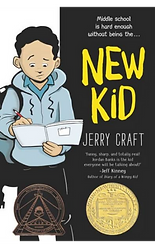
A graphic novel about a student navigating a new school environment, friendship, race, class, and belonging. Use to support conversations about school culture and everyday harm, including microaggressions, without asking racialized students to explain or carry the learning for others.


The Breadwinner Trilogy
Deborah Ellis
2009

A powerful series that opens conversations about human rights, gender, war, displacement, courage, and family responsibility. Use with historical and cultural context, and pair with multiple voices so Afghanistan, Muslim communities, and girls’ lives are not represented through a single story.
The Sharing Circle: Stories About First Nation Culture
Theresa Meuse-Dallien
2003

A collection of stories introducing young readers to First Nations cultural teachings, including the talking circle, medicine wheel, eagle feather, drum, and sacred medicines. Use with care, naming the Mi’kmaw creators and avoiding pan-Indigenous generalizations or disconnected use.