

Acknowledgments
Relationships First and Community Justice Connect acknowledge:
-
The lands on which we live are situated in the traditional territories of diverse Indigenous groups, and we acknowledge with respect the diverse histories and cultures of the Beothuk, Mi’kmaq, Innu, and Inuit of this province;
-
Our full dependence on all elements of the environment for our well-being;
-
The labour theft extracted from people of African descent and used to build European wealth and economies globally and in the Canadian nation-state—including Newfoundland and Labrador’s shipbuilding and cod fishery industries—through the violence of trans-Atlantic enslavement.
We trust that through this work with restorative justice, people in this province will be encouraged to live more fully interconnected lives that contribute to reconciliation, healing, and relational ways of being, knowing, and doing both personally and collectively as communities.
~~~~~~
Support and funding for this project were provided by The NL Department of Justice and Public Safety and the Memorial University Faculty of Education.
~~~~~~
This resource has been prepared by the staff of Relationships First Newfoundland and Labrador (RFNL) with the support of research assistant Nevra Ozoren-Sener. It is distributed free of charge to encourage all those seeking to establish relational ways of being and doing in their personal and professional lives to reach out to connect with others who share similar perspectives. In particular it has been created to further the implementation and sustainability of restorative justice principles and practices in the contexts of education, community, and the judiciary.
THIS IS A LIVING DOCUMENT. AS SUCH, CHANGES WILL BE MADE TO THE ON-LINE VERSION AS REQUIRED (see www.rfnl.org) IF YOU OR YOUR ORGANIZATION ARE LISTED IN THIS CATALOGUE AND YOUR INFORMATION HAS CHANGED OR YOU OFFER RESTORATIVE JUSTICE SERVICES OF ANY KIND AND WOULD LIKE TO BE INCLUDED IN THIS DOCUMENT, PLEASE CONTACT info@rfnl.org.
NOTE: Terminology used within the catalogue has been provided by each organization/individual. These may differ from group to group. For example, the phrase “restorative practices” may be used instead of “restorative justice;” offender and victim may be referenced as the one causing harm, the one experiencing harm. We honour the language provided by each.
INTRODUCTION
Restorative justice (rj*) practices in the contexts of education, community, and justice have a history and presence in NL. However, few people are aware of this work and as such are unable to advocate for or access services that do exist. Given the potential for societal transformation through restorative justice principles and practices, various organizations have recognized the need for creating a strong interconnected network of those engaged in this work. With such a network, opportunities for change increase as key decision-makers and the general public come to recognize the various ways of addressing the challenges we face daily.
Relationships First Newfoundland and Labrador (RFNL), a consortium housed in the Faculty of Education, Memorial University, has been promoting restorative justice principles and practices in NL throughout education, community, and judicial contexts for over 12 years.
Recently, in collaboration with Community Justice Connect (CJC), a provincial scan was initiated to identify all people and organizations with experience in and an understanding of restorative justice. Over twenty interviews were held and information collected from these resulted in this report which is comprised of two main parts:
-
Part 1: A catalogue of active agencies and individuals, their services, and their contact information;
-
Part 2: A collated summary of the information provided through these interviews including recommendations for growth to benefit the people of NL;
Significant work in education has been ongoing in NL since 2014, and many of the schools, with the support of the Department of Education, are engaged to varying degrees in promoting and implementing rj principles and practices in Pre-K to 12 schools. This includes the NL Schools, Indigenous schools, independent schools, and the Conseil Scolaire Francophone Provincial. A study conducted in 2020- 2021, identified how this work was being taken up across NL. Since then, this engagement has continued to grow. As schools are solidifying their engagement with rj formally and educators are challenging themselves to commit to rj as an approach for developing relational, responsive, and restorative school cultures, it is still early for identifying specific schools for this scan. However, the study report is included to highlight engagement up until 2020, and a list of current educators advocating for rj in education are listed. RFNL’s work with NLSchools continues with the goal of ensuring holistic implementation and sustainability. Two more parts include:
-
Part 3: A list of educators in the province who are implementing restorative justice education in their classrooms/schools and available for mentoring and consulting;
-
Part 4: A document summarizing restorative justice education in NL: Restorative justice education in Newfoundland and Labrador Schools--An Overview of Engagement (2021);
A final part to draw all aspects of rj in NL together at this time is an article describing the history and development of restorative justice in NL:
Part 5: Restorative Justice in Newfoundland and Labrador: An Ongoing Effort Amidst Challenges (2024).
*lower case rj is used as an acronym for restorative justice as it is not a name, a specific program, or an organization but a way of being and doing, a concept.

Community Justice Connect
Crow Kinship Consulting
Family Information Liaison Unit
http://www.justice.gc.ca/eng/fund-
fina/cj-jp/fund-fond/mmiw-fada/info.html
First Light (St. John’s Friendship Centre)
John Howard Society of Canada, NL
The Journey Project
Labrador Friendship Center
Miawpukek First Nation
No’kmaw Village: Flat Bay Band
Part 2
Part 3
PART 1: Catalogue of RJ Organizations & Individuals
NL Provincial Courts
Nunatsiavut Government
Public Legal Information Association of NL
Qalipu First Nation
RCMP (Indigenous & Community Policing)
Relationships First NL
ShaMaSha Centre
Thrive (Community Youth Network)
Turnings (Offender Support)
Victim Services
Community Justice Content
BACKGROUND INFORMATION
Community Justice Connect (CJC) provides a variety of conflict resolution services to Indigenous, racialized, and religious minority communities throughout Newfoundland and Labrador. The free, confidential, and voluntary services provided are grounded in restorative justice principles and practices and primarily address concerns, conflicts, and racism whether they be direct, indirect or systemic. Facilitators specialize in listening to what’s happening, and then providing guidance for the individual(s) involved to identify ways forward that are in the best interest of all. For more information visit
DEFINITION OF RESTORATIVE JUSTICE
Restorative Justice is a way of approaching a difficult situation. Our model for Community Justice Connect is built on integrating the ways of being restorative and anti-racist. We focus on the needs of the people involved by asking a series of questions that help you understand what is happening. CJC uses an anti-racist and anti-colonial approach to restorative justice questions and processes.
DEMOGRAPHIC SERVED
Community Justice Connect is open to residents of NL, regardless of immigration status, who identify as Indigenous, racialized or a religious minority, and are experiencing conflict.
SERVICES
Using restorative justice principles and practices, CJC provides a variety of accessible, value-based, and creative services to Indigenous, racialized, and religious minority communities in NL when they face conflict that is connected to experiences of discrimination, prejudice, and/or racism. This includes but is not limited to supporting individuals and groups with:
-
Conflict coaching allowing that allows people to work through conflict independently
-
Addressing disputes between neighbours or landlords
-
Addressing issues with employers
-
Dealing with experiences of discrimination and/or harassment because of your Indigeneity, race or religion
-
Understanding basic government forms or documents
-
Understanding basic legal information
-
Support for navigating through the courts or other legal processes. Legal advice is provided by referral to Public Legal Information Association of NL (PLIAN) or
-
other legal services
CJC works with people in conflict helping them to have difficult conversations in a manner that encourages respectful relations. If the other parties do not want to participate, CJC supports those seeking help to address their immediate needs for what is happening. The process begins with a conversation with the Lead Facilitator who listens to the immediate concern, then explains the CJC process and discusses options.

Crow Kinship Consulting
BACKGROUND INFORMATION
Owner, Cole Kippenhuck (they/them), is a Two Spirit Inuk Labradorian with 20+ years experience in nonprofit, private consulting, and government work, predominately in Labrador. Their lived experiences of violence, trauma, and addictions have contributed to a healing path of cultural revitalization, fluidity in all areas of living, and giving back to communities. Cole is a person of ceremony and a respected Indigenous knowledge holder. Crow Kinship Consulting is the culmination of their experiences, representing a commitment to values, healing, and kinship with all cultures for healthier communities.
Working from a trauma-informed lens, CKC uses Two(Spirit)-Eyed Seeing approaches that
includes meeting with staff to understand the vision and goals and then developing balanced paths forward to meet their objectives.
DEMOGRAPHIC SERVED
Predominately serving organizations, businesses, government agencies, Indigenous groups, schools, academics, health authorities, correctional facilities, and individuals working within the community sector and helping fields. Experience working with a variety of ages, backgrounds, genders, and other GBA+ identity factors.
SERVICES
CKC focuses on providing support, training, and coaching to organizations, communities, and individuals seeking to grow their capacity, develop sustainability, and decolonize their practices in meaningful ways.Using our unique Two Spirit approach, CKC specializes in facilitating (but not limited to) the following:
-
Project and program development and management
-
Policy review and development
-
Strategic planning, evaluation, and public consultation
-
Gender diversity, equity, and inclusion
-
Staff and volunteer management
-
Organizational mentorship and guidance
-
Community engagement, communication, and partnership development
-
Qualitative and quantitative analysis
-
Technical writing and reporting
-
Customized presentations, workshops, keynotes, and training sessions on a variety of topics.
DEFINITION OF RESTORATIVE JUSTICE
Our perspective on restorative justice is viewing “justice” (knowing this is a western word) through alens of Indigenous concepts of healing. While there are many ways to view how this healing takes place, it is within the circle that CKC is most familiar. Through collective circles and trauma-informed approaches, those harmed and those who have created harm come together with other guiding forces (Elders, community workers, agency representatives, family members, etc.) to find ways to work through the violence, harm, or conflict into a place of healing.
The objective of this circle approach is to identify and discuss the harm that has taken place, to explore what healing looks like, and to determine a plan of action for this healing to take place. It takes accountability on all within the circle, rejecting western approaches of criminalizing, isolating, or incarcerating those who have brought harm to others. Instead finding alternatives to the ways responsibility and reparation are realized.
Restorative justice becomes an alternative to western justice systems. As such it provides
opportunities to resolve conflict, create healthy relationships, and learn healthy ways to deal with conflict. How we restore balance to community when hurts have taken place is a focus point. An “offender” is an equally valued member of community as is the “victim”. The idea of restorative justice shifts the language of justice to a more community and holistic healing framework. Stepping away from the western ideas of incarceration, of what’s viewed as westernized crimes, and bringing it into, Indigenous concepts of ethics and laws within community, including the land.
Using Indigenous approaches such as healing circles, ceremony, and land-based practices there can be equal engagement of those harmed, those who have harmed, the families impacted, important Indigenous representatives such as Elders and knowledge keepers, along with western entities like RCMP, government agency staff, court representatives, etc. In a typical justice system, the family can read the victim impact system, but it is a judicial process. Whereas in restorative justice the collective community “circle” hears the story, holding it in a way to find healing, and takes part in the process forward.
As a land projector with an Indigenous lived experience perspective, the word “justice” becomes problematic from a western point of view. Rule of law comes from a colonized framework and many times works against Indigenous laws, values, and ways of being.
Restorative justice becomes one way in how we work within communities to heal fractures caused by colonial systems, for those who have been hurt and those who do the hurting. This in turn includes harm done to land, water, culture, and the next generations. Colonization is trauma. To have “justice” through an Indigenous lens we need to be trauma-informed and understand that everyone involved has their own experiences of the trauma that impacts them.

Family Information
Liaison Unit
Family Support Worker,
Kari Traynor | karitraynor@gov.nl.ca
Family Support Worker,
Catherine Mitsuk | catherinemitsuk@gov.nl.ca
March 7th, 2024
BACKGROUND INFORMATION
The Family Information Liaison Unit (FILU) of Newfoundland and Labrador was created in 2018 to support families of Missing and Murdered Indigenous Women and Girls (MMIWG). In 2023, serviceeligibility expanded to include families of all Missing and Murdered Indigenous People (MMIP). The FILU helps families to obtain information about their lost loved ones and supports them as they continue their healing journey. FILU services are available both, when charges are
laid or when no charges have or will occur. Further, FILU services are available, no matter how much time has passed since losing your loved one. Where possible, services could include su pporting family members inrestorative justice processes.
DEFINITION OF RESTORATIVE JUSTICE
The families that are served by the FILU define what restorative justice looks like for them and the FILU supports them through the process.
DEMOGRAPHIC SERVED
Families of Missing and Murdered Indigenous People. Family can include, but is not limited to:
-
Blood relations
-
Non-blood relations including traditionally adopted family, those considered kin, street family
SERVICES
The Family Support Workers employed within the Family Information Liaison Unit (FILU) provide culturally relevant services to the families of missing and murdered Indigenous people. In particular, they:
-
Provide Information Services:
-
Families of Missing and Murdered Indigenous People often have questions about their lost loved one. The FILU works with families to obtain information from government agencies and services. This includes providing support during ongoing matters before the criminal justice system and obtaining information on historical matters, even if charges were not laid.
-
-
Healing Opportunities:
-
Provide healing opportunities as defined by families (where possible). This can include sharing circles facilitated by an Elder, an annual Wellness Gathering to help those involved find restorative ways for moving forward and, if possible, towards healing. It may also include supporting families through restorative processes such as sentencing circles, Correctional Services Canada’s Restorative Justice Program, and/or other restorative justice measures requested by the family members.
-

First Light
BACKGROUND INFORMATION
First Light is a registered non-profit organization that serves the urban Indigenous and non-Indigenous communities alike by providing programs and services rooted in the revitalization, strengthening and celebration of Indigenous cultures and languages in the spirit of trust, respect, and friendship. At its core, it upholds principles and practices that encourage Indigenous and restorative justice ways of being. For more information please visit the website: https://firstlightnl.ca
DEFINITION OF RESTORATIVE JUSTICE
Restorative justice is a collaborative approach to restoring strained relationships or harm done to a person, group or community. It is based on Indigenous principles of respect, empathy, and consensus building and aims to maintain dignity, restore harmony, and repair relationships.
DEMOGRAPHIC SERVED
Indigenous and non-Indigenous individuals and communities in the province of all ages.
SERVICES
At the core of First Light programming, is a focus on fostering connections, strengthening
relationships, and revitalizing Indigenous culture. Our offerings include a wide range of activities, including:
-
Arts & Culture
-
Youth Development
-
Senior Programming
-
Recreation & Wellness
-
Teen & Young Adult Programming
-
Family Friendly Activities
-
Land-based Programming
-
Indigenous Housing Case Management,
-
Cultural Supports,
-
Indigenous Patient Navigator Program,
-
Indigenous Specific Justice Supports,
-
Substance Use and Prevention Peer Support,
-
Elders/ Knowledge Keepers Community Connection
-
Program
One of the restorative approaches used at First Light is circles of support and accountability. These circles are intended to create a safe environment for dialogue where participants come together to collectively address harm, take accountability, share insight, and collaboratively determine appropriate ractions for restitution.

John Howard Society of
Canada, NL
BACKGROUND INFORMATION
The John Howard Society of Canada (JHSC-NL) is a well-established voluntary, non-profit agency that provides intervention, residential, employment, and related programs and services to adults and youth involved in the criminal justice system. As the only organization of its kind in NL whose primary focus is to provide these services, it has over 100 employees and has served over 1400 residents in the province, annually. It is guided by a set of core values that respects the intrinsic worth and the rights of all people when involved in the criminal justice system. For more information please visit the website : https://www.johnhowardnl.ca
DEFINITION OF RESTORATIVE JUSTICE
JHSC-NL doesn’t use the term restorative justice in any of its literature or programming. However, their engagement with rj can be seen in their commitment to core values that
align with rj values and practices which state “every person has intrinsic worth and the right to be treated with dignity, equity, fairness and compassion without discrimination…” and “Justice is best served through measures that resolve conflicts, repair harm, and restore peaceful relations in society.
DEMOGRAPHIC SERVED
-
Youth and adults of all backgrounds, ages 13 and above
-
Currently serving ~275 people, the majority of clients served are males.
-
JHS-NL in-person services are only available to people on the island. JHS does provide some virtual services to the Labrador Correctional Center while encouraging and supporting various other organizations in Labrador when requested.
SERVICES
-
Programming support for people who are court-appointed or seeking services related to
-
involvement with the criminal justice system.
-
Outreach programs include support addressing needs associated with housing, addictions, domestic violence, employment, and advocacy.
-
In-reach prison programs In-reach prison programs address substance abuse, domestic violence,and intensive case management support for inmates to support reintegration upon release.
-
Community programs include support for families and communities engaging with those who have encountered and experienced criminal processes.
Services are wide-ranging and include individual counseling and programming as well as group programming facilitated by people with expertise in the areas clients require. Volunteers also support the work of JHSC-NL at residential centres, as prisoner visitors, and in governance work.

The Journey Project
BACKGROUND INFORMATION
The Journey Project exists to strengthen justice supports for survivors of sexual violence and intimate partner violence in Newfoundland and Labrador. The Journey Project was founded in 2017 as a collaborative initiative of Public Legal Information Association of NL and End Sexual Violence NL. For more information http://www.journeyproject.ca
DEFINITION OF RESTORATIVE JUSTICE
Restorative Justice embodies accountability as a path towards healing, something that is not available in our current systems. It engages community and interconnected support through dialogue circles and ensures the destigmatization of shame. Restorative justice, has many facets to it.
DEMOGRAPHIC SERVED
The Journey Project serves individuals of any age and gender who have experienced sexual violence and/or intimate partner violence.
SERVICES
The Journey Project does not offer specific restorative justice services as currently there are no programs in NL of which their clients can avail. However, they are familiar with and have engaged in various restorative justice events and learning opportunities and acknowledge the need for this as anoption for those they serve when it is safe to do so. As such, they
currently:
-
Provide legal support and system navigation for those experiencing and affected by sexual violence and/or intimate partner violence
-
Accompany survivors as needed and/or requested in any appointments/meetings they have regarding their experiences

Labrador Friendship
Centre
BACKGROUND INFORMATION
The Labrador Friendship Centre (LFC) endeavours to provide the best possible services to enrich the lives of the Indigenous Peoples of Labrador. These include the provision and implementation of social, cultural, health, educational, employment, and developmental initiatives. In the context of restorative justice, the LFC provides services within its Indigenous Justice Navigation Program. For more information please visit the website; http://www.lfchvgb.ca/home/justice.htm
DEFINITION OF RESTORATIVE JUSTICE
There is a growing understanding of restorative justice amongst the population being served. The organization defines restorative justice as a way to establish healing and closure between victims and offenders, allowing for moving forward after the crime.
DEMOGRAPHIC SERVED
Though the organization is Indigenous, its services are provided for all Labradorians of any age,
depending on their individual needs. Youth need to be accompanied by an adult. Currently, those served are mostly adult men.
SERVICES
In December 2022, the Labrador Friendship Centre began its Indigenous Justice Navigation Program, and hired its first full-time Justice Coordinator, who is tasked with identifying the gaps in the current system and supporting people when they are involved in the justice system. In these early stages, the following services are provided:
-
Supports are provided for anyone from Labrador who has been harmed or caused harm and is seeking help with navigating the current system
-
One hour of free consultation provided by two lawyers associated with LFC
-
As adult males who have caused harm have had few services available to them, they are the current focus on this early program
-
In September 2023, a weekly group has been started for men living in the Happy Valley-Goose Bay area. This includes dialogue, cultural activities, and mentorship sharing circles.

Miawpukek First Nation
Justice Committee
BACKGROUND INFORMATION
Miawpukek Mi’kamawey Mawi’omi is a First Nation Reserve located at the mouth of the Conne River on the south coast of the island of Newfoundland. Over the years, the community has seen a steady growth in Government, Social reforms, Health, Education, Economic
Development, Culture, and Traditions. Miawpukek Mi’kamawey Mawi’omi believes we will
“secure our future by investing in our past.” For more information regarding the community, please visit the website: https://mfngov.ca/
DEFINITION OF RESTORATIVE JUSTICE
Rj is an opportunity to work together with all directly impacted to restore balance and safety for all involved. It seeks to (1) bring the wrongdoing out into the open, (2) protect the person harmed, (3) create opportunity for those causing harm to take full responsibility, (4) create opportunity for balance and healing to be restored.
DEMOGRAPHIC SERVED
Community youth between the ages of 14-17.
SERVICES
-
Providing and facilitating healing circles: a pre-charge opportunity for a person in conflict with the law who accepts full responsibility for their actions.
-
Providing and facilitating sentencing circles: a post-charge opportunity for a person who pleads guilty in a court of law and is referred to MFNJC by the presiding judge.
-
Conducting justice awareness programs in the community’s school and other public settings.
Following an agreement between Miawpukek, the province, and Justice Canada in early 2000s, Restorative Justice processes that included NL judicial requirements, were introduced to the community in 2004. Judy White, in collaboration with local Elders and community members, designed and then provided a training experience for the MFNJC. Circles to address harm and conflict are facilitated in a traditional, Indigenous manner. Beginning with a smudge of sage or sweetgrass, a talking piece and other traditional symbols are used to guide the process. The event provides participants opportunity to share perspectives in four distinct circle rounds. Participants include those directly causing the harm, those experiencing the harm, and a committee of community members. Irene
Joe serves as the Justice Manager for the program.

No’kmaw Village
Flat Bay Band
BACKGROUND INFORMATION
No’kmaw Village is an independent Mi’Kmaw band serving membership residing in Flat Bay, E, W, and St.Theresa’s, NL as well as those living elsewhere across the province and country. It is a self-governing community without a governmental or municipal financial support base. Its mandate is to protect and represent the First Nations’ rights of its members to provincial and federal governments. It is a member of the Assembly of First Nations and a leader and active participant within the broader scope of the Mi’Kmaw communities. For more information regarding the community, please visit the website: www.flatbayband.ca
DEFINITION OF RESTORATIVE JUSTICE
Restorative justice includes a process for restoring peace and building up accountability for actions of harm occurring within the community. Its intention is to bring the community together in a respectful manner. Specifically related to the KRJS project, the Government of Canada defines rj as “an approach to justice that seeks to repair harm by providing an opportunity for those harmed and those who take responsibility for the
harm to communicate about and address their needs in the aftermath of a crime.
DEMOGRAPHIC SERVED
-
Support is available for all ages for those navigating the judicial system.
-
Extrajudicial Measures program is available for youth ages 12-17, from Indigenous communities across the island.
-
Future plans, post Youth Justice Program funding, include serving all adults and youth referred by RCMP, Department of Children, Seniors, and Social Development, as well as the Department of Education.
Liz Lasaga, Chief Executive Officer, No’Kmaw Village
Sarah Nash, Coordinator, Ktaqmukuk Restorative Justice
Strategy | sarahflatbayband@gmail.com
March 21 & May 9, 2023
SERVICES
-
Providing and facilitating healing, sentencing, support, and accountability circles for its members including youth.
-
K’Taqmkuk Restorative Justice Strategy for youth addresses extrajudicial measures only (notextrajudicial sanctions.) As such these circles do not involve formal pre-charge or post-charge circles, but involves and promotes specific conversations with the youth in hopes of resolution and learning.
-
Supporting youth involved in criminal cases to navigate the formal judicial process.
No’Kmaw Village has been providing restorative justice services for its members since time immemorial in the form of healing, sentencing, support, and accountability circles. More recently, since 2014, they have worked with Dr. Rosemary Ricciardelli to establish a formal extra-judicial measures for a youth program that involves and meets the requirements of the provincial judicial system. With a multi-year, 2020-2023, grant from the Department of Justice, Canada, Youth Justice, they have created a specific service whose
vision is to “reduce youth contact with the law and equalize the Indigenous incarceration rate which is proportional to the population” (p. 2, K’Taqmkuk Restorative Justice Strategy, 2022).
* Similar to the approach used by Miawpukek First Nation, circles to address harm and conflict are facilitated in a traditional, Indigenous manner. Participants include those directly causing the harm, those experiencing the harm, and a committee of community members. Currently, there are eight communities involved in this
project in the Flat Bay region, each with their own restorative justice committee who work collaboratively with the RCMP to facilitate circles.

NL Provincial Courts
BACKGROUND INFORMATION
The Provincial Court of Newfoundland and Labrador is the Court of first instance for all criminal and regulatory offences occurring in the province. These include: Adult Criminal Court, Youth Court, Traffic Court, Small Claims Court (to $25,000), and in areas outside covered by the Family Divisioin of the Supreme Court--Family Law (other than divorce and division of property.) The Court also conducts inquiries into accidental or mysterious deaths or fires.) While it does not explicitly employ restorative justice approaches, there are some principles and practices available in four areas: post-conviction, drug treatment court, mental health court, and intimate partner violence court.
DEFINITION OF RESTORATIVE JUSTICE
The concepts of restoration and relationship embedded in restorative justice are implied throughout the work of the provincial courts. There is no official definition of restorative justice in this institution.
DEMOGRAPHIC SERVED
-
Post conviction: all youth and adults involved in and convicted of crime.
-
Drug Treatment Court: Those adults age 18 and over, charged with drug addition motivated criminal offenses. Genearly high risk/high needs due to issues related to their problematic drug use.
-
Mental Health Court: Was established based on the recognition that certain offenders who suffer from a mental disorder may commit offenses as a consequence of their mental disorder or due to lifestyle issues related to their mental disorder such as inadequate or inappropriate housing, lack of employment, lack of support, noncompliance withmedications and inappropriate self-medication with alcohol or drugs.
-
Intimate Partner Violence Intervention Court: includes offences committed by the accusedarising from a relationship with a significant partner or ex-partner.
Michelle Park, Program & Policy Development Specialist |
Valerie Corcoran, Drug Treatment Court Provincial Manager |
February 23, 2024
SERVICES
The current Provincial Court services do not include specific restorative justice options. A few principles and practices are available when those responsible for providing services have had professional learning opportunities in this area that they personally take into their jobs.
-
Post conviction: there are some options available for those charged and convicted of having caused harm to address the impact of their actions in a restorative manner. These can includeapologies and/or possibilities for restitution related to property loss.
-
Drug treatment Court: The goal of Drug Treatment Court is to help people charged with drug addiction-motivated offenses. Designed to provide treatment and intervention to people with problematic drug use to help address the root causes of crime. Such relational approaches are grounded in restorative justice principles and are used to address the social needs and risks related to problematic drug use and criminal involvement. To restore community and repair harm, relational interaction and engagement are needed. This type of service is not offered in other courts/programs.
-
Mental Health Courts (MHC): the Court is designed to provide an increased level of support, both medical and community-based, to accused persons appearing before it. MHC engages in restorative justice principles and practices as a way to bring healing and improve the overall well-being of all those involved and impacted. It allows for a relational way to approach individuals both within the court and outside of it. Formal restorative justice approaches are not employed.
-
Intimate Partner Violence Intervention Court (IPVIC): IPVIC is a specialized criminal court, which in law operates in the same manner as traditional criminal justice courts, but is delivered in a way to better serve victims and hold offenders more accountable while requiring the offender to participate in intervention or programming regarding family violence. The goal of the Court is to prevent and reduce incidents of Intimate Partner violence by addressing the root causes of violence through teamwork with key community partners. Working together allows faster access to services for the victim and the offender. The Court focuses on improving victim safety and offender responsibility. Programming for offenders in this court is provided by Howard Society. Formal restorative justice approaches are not employed.

Nunatsiavut Government
BACKGROUND INFORMATION
The Nunatsiavut Government’s Justice Services program falls under the Mental Health and Healing
Division of the Department of Health and Social Development. It currently consists of a Regional
Justice Services Manager, Inuit Prison Liaison, Sexual Violence Prevention and Outreach Counsellor,
Inuit Justice Liaison, and Inuit Cultural Justice Educator. All of these positions are temporary and
project/funding based. The Regional Justice Services Manager continues to seek funding to continue
and expand work in the area of justice for Inuit.
The NG Justice Services focuses on working towards lowering rates of crime, violence, incarceration,
and recidivism, and ultimately, for healthy and safe communities. This is done by working to address
the issues that contribute to crime and incarceration, which include but is not limited to,
intergenerational trauma, addictions, FASD, and social determinants of health. The goal is to increase
and strengthen justice-related supports and resources, strive for fair and equal access to justice
services, and ensure inclusion in development of policies and decision-making that impact Inuit.
The Nunatsiavut Government does not currently have a formal restorative justice program, however, NG
Justice Services root their work in the overarching goals of restorative justice, such as by focusing on
healing and supporting offenders, victims, families, and communities, offering and connecting people
with rehabilitative and healing types of supports, encouraging accountability and responsibility, and
providing education and awareness on restorative options and processes. The hope is that this will
help to build a strong foundation for a future formal restorative justice program that aligns with cultural
values and community needs of Inuit.
DEFINITION OF RESTORATIVE JUSTICE
Restorative Justice for Inuit embodies a culturally responsive, holistic approach that aims to heal,repair, and prevent the occurrence of further harm. It involves the offender, victim, family, andcommunity. It entails of the offender taking accountability, community members and elders givingguidance and input when and where possible, such as through processes that promote opencommunication, mutual understanding, and inclusive decision-making. The goal is not only to addresscurrent harm, but also to prevent further harm, such as by providing awareness and understanding ofthe consequences of harmful behavior and actions, strengthening supports and resources incommunities, and offering tools and resources to offenders that contribute to their rehabilitation and toassist them with being able to contribute positively to their community, and ultimately, promote peaceand well-being in our communities.
DEMOGRAPHIC SERVED
NG Justice Services primarily serve Inuit ages 18 and older, throughout the Nunatsiavut region and Upper Lake Melville area. Youth ages 16-18 may access services as well, when needed.
SERVICES
Regional Justice Services Manager- one of the roles of this position is to provide one-on-one support to individuals (Inuit) involved in the criminal justice system to help them navigate the system, communicate with legal counsel, advocate regarding federal and provincial aspects of the justice system, assist with anything really that an individual requests an interest in to best meet their needs. The RJSM has assisted with coordinating a sentencing circle, completing a Gladue Report and assisting a Gladue Report Writer with gathering necessary information, collaborating with parole officers, probation officers, correctional staff, etc.
Sexual Violence Prevention and Outreach Counsellor- provides counselling and group programming to primarily adults ages 18 and older, and ages 16-18 when needed who have been charged, convicted, or at risk of committing offences of harm of a sexual nature. Also provides education and awareness to public about various topics related to sexual health and safety, such as healthy relationships, boundaries, communication, ages of sexual consent, and sexual wellness.
Inuit Cultural Justice Educator- develops and delivers education and awareness about Inuit culture, history, and trauma, primarily to criminal justice professionals, as well as service providers of other organizations that work with Inuit, such as Child and Youth Advocate, Office of the Citizen’s Representative, John Howard Society NL to name a few.
Inuit Justice Liaison- working on developing an Indigenous Justice Strategy specific for Nunatsiavut Inuit to present to Justice Canada. Also part of a justice working group with ITK (Inuit Tapiriit Kanatami) in co-developing a chapter in the Indigenous Justice Strategy for Inuit Nunangat.
Inuit Prison Liaison- works in the Labrador Correctional Centre in Happy Valley-Goose Bay, primarily with Inuit. All individuals in the LCC are adults and all are male. However, the LCC is currently undergoing construction to expand to be able to accommodate females, so in the near future, the Inuit Prison Liaison will also work with female adults in the LCC.

Qalipu First Nation
BACKGROUND INFORMATION
Qalipu First Nation is one of only two federally recognized First Nation bands on the island of Newfoundland (Ktaqmkuk, meaning “Across the Waters”), alongside our relatives in Miawpukek First Nation (Conne River). Qalipu First Nation is made up of 67 Mi’kmaq communities within Newfoundland, organized into nine electoral wards across the island. With over 25,000 members living both in these communities and around the world, we maintain offices in Corner Brook, Glenwood, Grand FallsWindsor, St. George’s, and Stephenville. Through these offices, we deliver a wide range of services to our members including Education, Training and Employment, Housing, Health and Wellness, Economic Development and Natural Resources. Guided by our mission to achieve the advancement of our people, we work to honor our teachings, strengthen our communities, and ensure the well-being of current and future generations.
DEMOGRAPHIC SERVED
Qalipu First Nation is one of the largest First Nations in Canada. QFN primarily serves more than 25,000 members living in our 67 Mi’kmaw communities across nine electoral wards, as well as throughout Newfoundland, across Canada, and around the world.
SERVICES
Qalipu First Nation integrates a restorative approach into the broad range of supports we offer, ensuring that healing, accountability, and relationship-building guides all aspects of our work. Restorative approaches are woven throughout our programs and services, including education and training, housing, health, employment, community and economic development, natural resources, and cultural initiatives. These practices create spaces for dialogue, repair of harm, reconciliation, and holistic healing, fostering stronger relationships within families, communities, and across the Nation. For the Mi’kmaq, restorative justice is not a program but a way of life — a reflection of who we are and how we continue to walk in balance with one another
DEFINITION OF RESTORATIVE JUSTICE
The history of Mi’kmaw people is very long, and our homeland, Mi’kma’ki, extends across what is nowNewfoundland, Nova Scotia, Prince Edward Island, large parts of New Brunswick, Quebec’s GaspéPeninsula, and parts of Maine. For Mi’kmaq, justice has never been about written rules alone, but aboutliving in good relations. Our people have always learned our culture, history, and laws through oraltraditions, stories, and legends, which guide how we live together in harmony.
Customary laws have long governed Mi’kmaw society, focusing on relationships, accountability, and therestoration of peace within the community. Justice for us is not about punishment but about restoringbalance — reconciling the person who caused harm with their own conscience, with those they havewronged, and with the community as a whole. This is done through social controls, but moreimportantly, through processes of forgiveness, repair, and reintegration. These traditions remind us thateach person has a responsibility to the whole community, and that wrongs must be repaired so healingcan happen.
For Mi’kmaq, restorative justice is not new — it is a continuation of what has always been. Even withouta formal justice department, Qalipu First Nation upholds these approaches through healing circles,support gatherings, accountability processes, and community-based solutions. Restorative justicereflects our understanding that peace, balance, and reconciliation come through collectiveresponsibility and healing, not punishment.

Royal Canadian Mounted Police (RCMP)
BACKGROUND INFORMATION
The RCMP is a national police force serving populations governed by the Canadian government i.e. Indigenous peoples, and addressing specific issues under the jurisdiction of the federal government. In communities that are not served by local or provincial police services, the RCMP provides services relating to jurisdictions and people under the auspices of the provincial and municipal governments. As Indigenous peoples are governed under the current Indian Act, criminal concerns involving this population are addressed by the RCMP.
To date, the RCMP acknowledges the reality that Indigenous peoples, both offenders and victims, are overrepresented in the Canadian criminal justice system. As the RCMP was involved in enforcing colonial rule, the present day responsibilities are extremely complex. In NL, the RCMP is working with Indigenous communities in regard to restorative justice opportunities, especially in Central and Western Newfoundland. For more information regarding the national RCMP policing program and restorative justice please visit the website; https://www.rcmp-grc.gc.ca/en/indigenous-policing
DEFINITION OF RESTORATIVE JUSTICE
Official RCMP definition from https://www.rcmp-grc.gc.ca/indigenous-autochtone/resto-eng.htm: “Restorative Justice is an approach to justice that encourages victims/survivors, individuals offenders, and the community to be involved in dealing with the impact of criminal and offending behaviour. It aims to address the needs of victims/survivors and the community, while placing an emphasis on accountability on the offender and repairing the harm caused by their actions. The goal is to reach meaningful, satisfying, and fair outcomes through: inclusion, open communication, [and] truth. Restorative Justice: builds on respect, compassion and inclusivity; encourages meaningful engagement and accountability; [and] provides an opportunity for reparation and reintegration.”
Crystal Leighton, Indigenous and Community Policing NL | crystal.leighton@rcmp-grc.gc.ca
June 8, 2023
DEMOGRAPHIC SERVED
Currently, RCMP engages with restorative justice programming mainly in Central to the West Coast. Though engaged specifically with the K’Taqmkuk Restorative Justice Strategy, anyone in that area may be eligible for similar support if services are available.
SERVICES
Supporting Indigenous people in navigating the judicial system
Overseeing Indigenous community and supporting rj program
Using rj wherever/whenever as a first approach
Meeting with the restorative justice coordinator of K’Taqmkuk Restorative Justice Strategy on a monthly basis
RCMP works with the twelve communities connected to the Flat Bay K’Taqmkuk Restorative Justice Strategy. It refers people to the restorative justice possibilities, is involved in the various circle processes where possible, and makes it possible for more of the RCMP members to be trained.

Public Legal Information Association of NL (PLIAN)
BACKGROUND INFORMATION
PLIAN is an independent, non-profit organization that provides general information and education regarding all matters relating to legal concerns to all Newfoundlanders and Labradorians as requested. It’s goal is to increase access to justice for all. For more information, visit: https://publiclegalinfo.com/
DEFINITION OF RESTORATIVE JUSTICE
Restorative justice is an application of principles and practices that is recognized in the legal system. Itworks to restoring damaged relationships between people and the broader community. Restorativejustice enables a shift in focus from punishment to restoring damaged relationships. It recognizes theneed for understanding that the community is an interconnected whole.
DEMOGRAPHIC SERVED
It's easy. Anyone in NL, who has questions concerning legal issues. Underserviced populations are sought out to ensure the legal system is available to them for their benefit.
SERVICES
PLIAN supports people with concerns relating to the traditional legal system, ensuring they have all the information required to be well-supported. They provide:
Lawyer-referral services and a Legal Information Line
Plain-language legal materials
Free legal clinics and information sessions
PLIAN does not offer specific restorative justice services. However, it strongly supports restorative justice practices and relational principles in its work and refers people to agencies offering these services when applicable.

Relationships First NL
dr. dorothy vaandering, Director | dorothy@rfnl.org
Sarah McDonald Moores, RJ Education Coordinator | sarah@rfnl.org Lisa Charlong-Norris, Grants Facilitation Officer | lisa@rfnl.org
January 10, 2024
BACKGROUND INFORMATION
Relationships First Newfoundland and Labrador (RFNL) is a provincial restorative justice organization housed in Memorial University’s Faculty of Education. We aim to provide support, resources, research, and recommendations for the sustainability of the holistic integration of restorative justice in Newfoundland and Labrador. Currently, we are working with our funders to create opportunities for members of a variety of communities to learn about and through restorative justice in project-specific contexts.
DEFINITION OF RESTORATIVE JUSTICE
We believe that Restorative Justice is a way of being and define it as the framework upon which communities nurture the capacity of people to engage with one another and their environment in a manner that supports and respects the inherent dignity and worth of all. We are led by the interconnection of four equally significant intentions:
Embodying respect, dignity, and mutual concern
Creating just and equitable environments
Nurturing healthy relationships
Repairing harm and transforming conflict
DEMOGRAPHIC SERVED
RFNL promotes, supports, and encourages the development of relational policies and practices within various organizations engaged with youth. RFNL focuses on creating and sustaining relational cultures for all in Newfoundland and Labrador.
SERVICES
RFNL aims to provide support, resources, research, and recommendations for the sustainability of the holistic integration of restorative justice in Newfoundland and Labrador. Currently, we are working with our funders to create opportunities for members of a variety of communities to learn about and through restorative justice in project-specific contexts. RFNL works to spread awareness and messaging which highlights and encourages relational ways of being and knowing through the development and facilitation of meaningful professional learning opportunities, facilitated circle experiences/meetings, and a variety of presentations. RFNL creates innovative digital and print resources to aid in the promotion of a deeper understanding of relational ways of being, knowing, and doing.

ShaMaSha Centre
BACKGROUND INFORMATION
Daphne grew up in the community of Gillams in Newfoundland and Labrador. Her work focuses on supporting individuals on their health, wellness, and recovery journey through holistic healing. She is a passionate advocate for those who do not have a voice. ShaMaSha provides a safe space for people to learn, heal, and connect, embodying key components of approaching life through a lens of holistic restorative justice.
DEFINITION OF RESTORATIVE JUSTICE
Restorative justice is looking at the injustice of the past, learning and healing for future generations. Creating leaders in our communities for belonging and connecting to all living beings.
DEMOGRAPHIC SERVED
Services Indigenous and non-Indigenous peoples.
SERVICES
At ShaMaSha, you are invited to discover your true self through immersion in Indigenous ways of being and knowing. Engage in yoga-informed recovery coaching and land-based healing as you work to embrace traditional relationships with the land. Daphne hosts health and wellness retreats, offers consultations, and is available for speaking engagements. Additionally, she hosts Universal Meetings online every Monday morning, serving as virtual Circles for individuals in recovery.

Thrive
BACKGROUND INFORMATION
Established in 2001, Thrive is an organization providing a variety of services for resilient youth and young adults struggling with poverty and accessing mainstream services and programs in NL. Through building community partnerships, Thrive seeks to connect relationally with marginalized youth to increase their awareness of existing and available programs while supporting them as they access them. They provide services through Street Reach, Educational Initiatives (Youth at Promise and high school equivalency preparation programs), Coalition against Sexual Exploitation of Youth (CASEYworking to address issues of sexual exploitation) and Blue Door (providing for youth who have experience in sex trade and sexual exploitation who are seeking support. Their vision is “Meeting vulnerable individuals where they are, helping them go where they want to go, and supporting them to be who they want to be.” For details see: https://www.thrivecyn.ca
DEFINITION OF RESTORATIVE JUSTICE
Restorative Justice is a way of being that understands and exemplifies that all people have value and are to be honoured. Restoration occurs when all people are heard, so that equal opportunities and equitable responses can be provided.
DEMOGRAPHIC SERVED
Thrive engages with youth and young adults between the ages of 16-29 years of age; Street Reach and Blue Door work with people 16 and up; the Education programs work with individuals 16-29, regardless of race, gender, sexuality, religion, class and/or ability
SERVICES
Thrive approaches its programming through a restorative lens, providing relationship-based programs that are flexible, trauma-informed, and anti-oppressive. When harm and conflict occur within the organization amongst participants and/or employees, their policies embrace a restorative justice process to guide those involved to resolution.
Thrive’s Street Reach program includes a number of supports and services, most notably downtown outreach walks, a weekly community meal (Thursdays 5-8 pm), and drop-in supports (Monday-Thursday 10-4 pm, Fridays 12:30-4 pm). Individuals can access supportive conversations, a phone to make calls, or wifi, as well as individual support coordination where appropriate. For weekly meal details, check the Facebook page (facebook.com/thrivecyn).
The low-barrier educational programs work outside the mainstream school system and provide opportunities for learning foundational, as well as grade 7-12 curriculum for people who have left school before they have graduated. Support includes small class sizes, and wraparound supports from a dedicated Outreach Coordinator.
The Blue Door program offers wraparound supports for people who have experience within the sex trade and/or with sexual exploitation, including housing supports, individual supportive counseling, arts-based groups, and peer support.

Turnings
BACKGROUND INFORMATION
Turnings was established in 1993 as the Metro Community Chaplaincy, and renamed Turnings in 1994. Beginning as part of CoSA Canada (https://www.cosacanada.com ), its mandate continues to make available to NL, circles of support for high needs/high risk sexual offenders incarcerated or previously incarcerated in Federal and Provincial institutions. Turnings mission statement is “NO MORE VICTIMS” as it continues its commitment to bringing an end to victimization and creating safer, healthier communities for all. It recognizes that safe communities come from healthy connections and relationships, not punishment. Research into the services provided indicates that Circles result in a 70% decrease in recidivism for members compared to those who did not belong to Circles. For more information please visit the website: https://www.turningsnl.com
DEFINITION OF RESTORATIVE JUSTICE
Restorative justice encourages offenders to acknowledge the harmful impact of their actions on others and understand that healing will involve taking responsibility for meeting the resulting needs of those harmed. Restorative justice supports offenders and holds them accountable to ensure the safety of all as they work to re-integrate back into their community.
DEMOGRAPHIC SERVED
Turnings serves adult men and women. The majority of their members are non-Indigenous adult men who reside in or are citizens of NL.
SERVICES
-
Providing circles of support and accountability for high risk/high needs (ex)offenders consisting of Turnings staff and community volunteers.
-
Circles include regular meetings and meetings-at-request by members seeking to avoid causing harm again and recommitting criminal activity.
-
In-reach services are provided for offenders in provincial and federal prisons in NL and other provinces who are anticipating returning to NL communities upon release.
-
Outreach support is provided for previously incarcerated members who have returned to their communities.
Turnings has been working to provide safer communities since 1992. Under the direction of Mr. Dan McGettigan, and with a small staff of three people and many volunteers, Turnings has continuously provided services for those who have caused harm as well as those who support them (families, friends). Dozens of people have found significant support and encouragement through this small team of dedicated professionals.
Victim Services
BACKGROUND INFORMATION
Victim Services, a program within the NL Department of Justice and Public Safety, provides assistance to victims of crime in NL for a wide variety of situations including, but not limited to:
Intimate partner violence (domestic violence) Threats Sexual assault Homicide (family members can access services) Criminal harassment (stalking) Impaired driving Personal violence like assault; assault with a weapon; Property crimes assault causing bodily harm, robbery Theft and fraud
DEFINITION OF RESTORATIVE JUSTICE
Victim Services NL, does not have an official definition of restorative justice.
DEMOGRAPHIC SERVED
-
Individuals 16 years of age and older who have been victims of crime, regardless if it has been reported to police or charges laid.
-
Individuals under the age of 16 can receive services with consent of caregiver if they are a victim or witness where charges have been laid.
SERVICES
-
General information about the criminal justice system
-
Specific case information
-
Safety planning
-
Court preparation
-
Assistance with Victim Impact Statements or Community Impact Statements
-
Assessments and referrals to specialized community resources, if required
-
Emotional support and short-term counseling as you prepare to go through court
-
Supporting and facilitating initiatives to increase awareness and education regarding needs and issues of victims
Victim Services accepts referrals from community and government-based agencies, including police forces, crown attorneys, and child protection workers, as well as self-referrals from adult victims of crime and caregivers of children/youth. Victim Services will inform clients of any available restorative justice option such as through parole or adult diversion.

PART 2: Summary & Recommendations
Provincial Scan Summary
The scan process included interviews between April and December 2023 with individuals and representatives from the various organizations listed in the catalogue. We began by contacting those RFNL, FL, and CJC knew who were currently involved in rj of some kind. This expanded as those who were interviewed recommended others for us to contact. We used a standard set of questions to guide the conversations, eliminating those that were not relevant, as well as listening to any other details the interviewee wanted to include. The questions included:
-
How do you define restorative justice (rj)?
-
How are you engaging with rj principles or practices in your work? Describe
-
How long have you been involved in this work?
-
What is the demographic of the people you are serving?
-
What formal training, if any, have you participated in to inform your current practice?
-
Do you distinguish between Indigenous justice and restorative justice? If so, describe.
-
Are your practices informed by Indigenous ways of being and knowing? How?
-
Are you/your organization informed about Indigenous history and groups in NL?
-
Do you offer services specifically for Indigenous participants?
-
Do the TRC and or MMIWG Reports and Recommendations inform your practice in any way?
-
Are you collaborating and engaging with other organizations engaged with restorativ
-
e justice? If so, which ones?
-
Do you/your organization offer translation services?
-
Are you using, or have you created any specific resources that guide your work with restorative justice? If so, can you describe them? Do you share them with other communities/groups?
-
What do you feel would strengthen your work with rj?
-
What do you feel would strengthen the promotion of rj across NL?
-
Do you/your organization collect data on the participants and services you provide? Explain.
-
Do you know of others engaged with rj that we could reach out to?
-
Is there anything else you’d like to share?

Besides the details provided in the catalogue portion of this document, several key insights were observed:
Definitions of restorative justice varied: Distinct aspects of restorative justice arose as a result of personal experiences, organizational missions, and community contexts. However, the definitions converged on restorative justice encapsulating a spectrum of alternatives for healing and conflict resolution by prioritizing relational dynamics that would foster community cohesion. Five of the participants touched upon the Indigenous roots of restorative justice. One participant noted: “Restorative justice is a collaborative approach to restoring strained relationships or harm done to a person, group or community. It is based on Indigenous principles of respect, empathy and consensus building and aims to maintain dignity, restore harmony, and repair relationships. ” Another described restorative justice as an alternative to punishment and an opportunity for reconciliation by giving equal opportunities and honoring those involved.
Demographics: The people served by the organizations were influenced by geographic parameters (i.e. Labrador, the Avalon, Central) and/or their respective missions. Seven of the 18 participants indicated a primary focus on engaging with youth aged 12 to 29 to ensure the well-being of youth and to impact future generations; the remaining participants encompassed a broader scope of all age groups. Additionally, most organizations conveyed an intention to reach underrepresented people (e.g., Indigenous communities, newcomers, former offenders) within the purview of their mission, while demonstrating flexibility to assist with a wider spectrum of individuals within the province.
Circle practices: The prevailing practice in offering restorative justice services is the utilization of circle dialogue. Various types of circles—such as healing circles, accountability circles, sentencing circles, sharing circles, and support circles—are being employed based on the objectives of the organizations and individuals involved. Eight of 15 participants explained that they use circles to create a safe environment for open dialogue, to come together and learn from each other’s perspectives, and to address harm and resolve conflicts. Organizations not offering circle practices offer services or programs that include working relationally with and in communities to address injustice in society, family support, educational initiatives, legal support, therapy for mental health, and justice awareness programs.
Language Translation: Five respondents acknowledged offering translation services as needed. Of these, four outsourced translation tasks to proficient linguists or native speakers when circumstances necessitated. Nonetheless, unanimity prevailed among all participants that having translators to facilitate more effective assistance for individuals such as Indigenous people and newcomers, was needed. Resource constraints, both financial and human (notably the scarcity of translators proficient in certain languages), precluded the comprehensive provision of these services.
Relationships First: In the current context of Newfoundland and Labrador's pursuit of restorative justice principles and practices, Relationships First NL (RFNL) was identified as an organization that encouraged a comprehensive intra-provincial, cross-cultural view that includes education, community engagement, and judicial perspectives. The collaborative work of RFNL with FL and CJC to create this consolidated repository of restorative justice initiatives in the province is welcomed as a way to encourage and leverage our collective strengths.
Scan Recommendations
Participants interviewed for this report were asked to share their thoughts regarding what they needed to strengthen their work and what they felt would strengthen the promotion of restorative justice across NL. Insights gathered will help to guide everyone’s work going forward. They include:
-
Collaboration and communication are key elements for the success of their work and the promotion of restorative justice across the province;
-
Networking with community partners, individuals, and organizations is required to confirm a clear definition of rj to achieve transformation of justice and equity for the next generations;
-
A deepened understanding and engagement with restorative justice as a decolonizing approach and responsive to the TRC recommendations;
-
A resource list, website, and official network for people who are actively engaging with restorative justice are essential for its promotion;
-
Building connections with NL government to inform and develop robust, effective, and stable policies and training programs that enable accessible public engagement with restorative justice opportunities;
-
Formalizing restorative justice in the judicial system so it is available at every stage of a person’s encounter with the law. Adequate and sustained funding for operational costs.
Restorative Justice in Newfoundland and Labrador is a document that is poised to illuminate pathways for future research, empower decision-makers, and galvanize stakeholders. The diverse demographics engaged by the organizations and individuals involved, the prevalence of circle-based practices, and the shared acknowledgment of restorative justice's Indigenous roots paint a portrait of dedication and evolution.
Dr. Dwayne Donald, Cree scholar from the University of Alberta defines colonization as the extended process of learning to deny relationships.* At its core, the participants who contributed to the content of Restorative Justice in NL are learning individually and together that the nuances of restorative justice are embedded in providing opportunities to engage in an extended process of learning to affirm relationships!

PART 3: List of RJE Mentors in NL Schools
The success of restorative justice in education is deeply dependent on mentoring and support fromwithin our education system. The following is a list of current educators in Newfoundland and Labradorwho have knowledge, experience, and training in restorative justice education. We invite you to reachout to them for collaboration, consultation, and conversation as we work collectively toward restorative,relational school cultures in Newfoundland and Labrador.
This is not an exhaustive list so please check our website for updates and/or changes.
Janice Adams
Completed ED6463 Interested in the establishment of rj in NL’s early child care
Alyssa Brennan
RJ Team Lead, Holy Trinity High Completed ED6463 Participant at RFNL Summer Institute Participant at Connect RP Virtual Conference
Asher N.
Cutting PBIS Itinerant Teacher, 2009, Nova Central Implemented rje in K-9 settings Facilitated numerous rj training sessions
Jennifer Ducey
Participant: RFNL Harm & Difficult Conversations PL | Panelist at RFNL’s 2024 Summer Institute Facilitated and coordinated rje PL sessions IRT & Counsellor utilizing trauma informed practices
Susan Finn
Reach out to RFNL to connect with Susan Virginia Fudge
Experienced Circle facilitator Interested in supporting students in learning rje skills Completed training with Yukon Circle of Change Participant at multiple RFNL Summer Institutes
Lynette Geehan
Completed ED6463 Has attended multiple rj/rje conferences Mentors and shares knowledge with educators
Dianne Hickey
Safe and Inclusive Schools Itinerant Offers introductory rje PL; Models rje Circles Hosts RJ Administrator Cohort Extensive rje experience including Circles for harm
Alice Hunt
Completed ED6463 Graduate research in parenting and rje Consultant and proof reader: RFNL RJE Handbook Facilitated and coordinated rje PL sessions
Sarah McDonald Moores
sarahruthmcdonald@gmail.com | sarah@rfnl.org
RJE Coordinator, Relationships First NL Per-course instructor of ED6463 Extensive rje experience including Circles for harm
Dr Sherra Robinson
Mi’kmaw Woman
Program Implementation Specialist, EDU, K-12 Branch
Facilitates rje PL locally & internationally
Extensive rje experience including Circles for harm
Émile Sopkowe
Grade 6 classroom educator
M.Ed. in Social Justice Education
Facilitates PL on rje and the intersection of rje
and 2SLGBTQ+ equity
Yvonne Smith
Community Facilitator for Community Justice
Connect Member of National RJ Planning
Committee, 2022 Training and experience in restorative justice
Mike Barbour
Former student of dorothy vaandering Graduate of STEM Primary/Elementary Program Rj experience in community organizations Believes in the power of story-telling in Circle
Shelley Coleman
Former Safe and Caring Schools Itinerant Has facilitated student and staff rje learning sessions and has completed level one training as a restorative educator
Adrien Doucet
Rj presenter and implementer Uses Circles for learning and community-building in the K-6 setting
Lesley Facey
Elementary classroom teacher M.Ed. in Social Justice Education Facilitates PL on practical implementation of rje Presenter at IgniteEd, ULearn, RFNL Summer Institutes
Virginia Fudge
Elementary classroom teacher Completed ED6463 RFNL Summer Institute 2022 and 2023 Sharing circle pedagogy with students/staff through the care committee and school development team.
Sarah Hedderson
Completed PL with Dr. Jeff Grumley Worked in Nunavut as a teacher for 5 years where rj was in practice in the schools
Tonya Kearley Russell
tonyakr1@gmail.com | tonyakearley@nlesd.ca
Film Studies / Theatre Dept.
SEL Coach
RJ Team Holy Trinity High
Stephanie Lidstone
stephanielidstone@nlschools.ca
Completed ED6463
Facilitated and coordinated rje PL sessions
Extensive rje experience including Circles for harm
Penny Pinsent
Minister’s Award for Compassion in Teaching, 2023
Presenter, Project Lead, Mentor, and Lead Teacher (Trauma-Informed, RJE & Math, Reconciliation) Extensive rje experience including Circles for harm
Roxanne Skanes
Founding member of RF-RJE NL Consortium
Extensive rje experience including Circles for harm
Member of RFNL Education Resource Committee
Experienced rje facilitator and mentor
Kristie St Croix
Masters of Professional Education in Equity,
Diversity & Social Justice
Participant: RFNL Harm & Difficult Conversations
PL | Completed ED6463
Trevor Wall
Experienced teacher and administrator
Works with students and staff to build positive relationships as the core of rje
Offered rje PL at past principal's meetings
PART 4: Restorative Justice in NL Schools
RESTORATIVE JUSTICE EDUCATION
IN
NEWFOUNDLAND AND LABRADOR SCHOOLS—
AN OVERVIEW OF ENGAGEMENT

Dr. dorothy vaandering,
Memorial University of Newfoundland and Labrador
August 2021

Acknowledgements
dorothy vaandering, PhD
Project Director
With support from:
Dr. Gerald White
Dr. Rosemary Ricciardelli
Student Research Assistants:
Taneisha Wright-Cameron
Kimberly Saunders
Tarun Subrmanian Iyer
Image: Author’s personal photo of rug hooked using the design of Vladimir Kandinsky
RJE in Newfoundland and Labrador Schools—
an overview of engagement
1.0 Executive Summary of Key Findings
2.0 Introduction and Study Background
2.1 The global context
2.2 The local context
2.3 The study
2.4 The researcher
3.0 Methodology
3.1 Survey Design
3.2 Survey administration, Completion Results, and Limitations
4.0 Participant/school Profile
5.0 Findings
5.1 How many schools and educators are engaged with RJE?
5.2 How are participants understanding the essence of RJE?
5.3 What needs are identified for stronger engagement?
5.4 What is the interest for continuing?
6.0 Summary and Recommendations
6.1 Summary
6.2 How significant is RJE traction in NL Schools?
6.3 Recommendations
6.4 A Final Important Recommendation
7.0 Conclusion
Appendix A: Survey Questions
Appendix B: Theses, Projects, Reports, Publications arising from the NL experience:
RJE in Newfoundland and Labrador Schools—
an overview of engagement
1.0 Executive Summary
In August 2012, 17 classroom teachers from nine Newfoundland and Labrador (NL) schools participated in a full-time two-week professional learning experience that introduced them to Restorative Justice Education (RJE). The project was designed and facilitated by Dr. dorothy vaandering and funded by Social Sciences and Humanities Research Council (SSHRC). The grassroots approach intentionally began with educators with the hope that in time their work would come to the attention of the NL Department of Education and the directors/administrators of schools and districts. This unique ground-up approach is supported by research indicating teacher initiative can grow into a whole-school adoption that includes all stakeholders.
To determine traction of RJE in NL since its inception, a brief survey was distributed to all NL schools in May 2020 (271 in total). The data collected that informs this report provides an understanding of how RJE is perceived and practiced by educators and schools. More importantly, it addresses the larger question: Can sustainable implementation of RJE be initiated from the ground up? The online questionnaire was designed using the Qualtrics platform, and participants were recruited via email that saw a 23% percentage response rate. The data was analyzed using thematic and descriptive analysis.
The findings revealed that of the 63 schools that responded to the survey, 57 indicated engagement with RJE in some form. Eleven of these schools described their engagement as a whole-school approach, while 48 of them described their engagement as primarily educators working independently. Also, 41 schools reported that they had been engaged in RJE for less than four years, five have been involved for 5-9 years, and ten schools indicated that they were not sure of the length of time. Based on the overall findings, the evidence revealed approximately 21% of schools in NL engage with RJE. Considering that RJE was introduced nine years ago to a small group of classroom educators in the province, it can be concluded that there is a significant impact based on the percentage of schools engaged and their understanding that restorative justice is a way of being. The findings shed light on the fact that engagement with and growth of RJE have potential for being sustainable when initiated from the ground up.
With this strong foundation and high interest for engagement, the following recommendations are suggested to solidify the work that has been done so far. There is a need for: (1) policies to be developed and resources provided by the Department of Education, (2) intentional time and guidelines for implementation by districts/schools, (3) graduate and undergraduate course development at the Faculty of Education, (4) collaboration and consultation with Indigenous leadership in encouraging schools to nurture relational cultures.
2.0 Introduction and Study Background
2.1 The global context Restorative justice in education (RJE) is a holistic educational approach meant to ensure that everyone connected to a school community feels that they belong, they have a voice, and they have a process for dealing with conflict and harm in a constructive manner. As such, it seeks to ensure adults in education establish and model for children, youth, colleagues, families, and community, just and equitable learning/living environments.
RJE’s 25-year history began in Australia in the early 1990s. Shortly thereafter, individual educators and schools, as well as a few school districts in Canada, began to engage. In its early stages, RJE was seen predominantly as an approach to address the behavior of students so that escalating office referrals as well as suspension and expulsion rates could be curbed. Through research, this limited focus of using RJE to address behaviour was seen to be detrimental for students, which has led to a much more robust approach that seeks to encourage educational institutions to develop responsive, relationshipbased cultures rather than reactive, rule-based cultures. This includes acknowledging the Indigenous roots and contemporary ways of being from which RJE has emerged, as well as the various cultures, philosophies, and religions that uphold relationship as “understanding each other through each other,” i.e., ubuntu, sawbona, shalom (Llewellyn, 2012). As such, most recently, in NL, as well as other parts of Canada, RJE is being considered as being instrumental in addressing the Truth and Reconciliation Report’s recommendations.
Across the globe, the grassroots development of RJE since the late 1990’s, has made it difficult to discern how schools/educators are perceiving and engaging with it. This study contributes to an international collaboration of Dr. dorothy vaandering with Dr. Kristin Reimer (Monash University, Australia) and Dr. Brenda Morrison (Simon Fraser University, British Columbia). By examining what is happening in our particular regions and then comparing and contrasting these findings, we seek to deepen our understanding of patterns and points of (dis)connection within and amongst the various local, regional, and/or national studies.
2.2 The local context RJE has been gaining traction in NL since August 2012, when 17 educators were introduced to this way of being in a 2-week immersive full-time institute funded by SSHRC. From its inception, because of the holistic, relational principles that characterize RJE, implementation was intended to grow through a grassroots approach initiated by educators in classrooms. This is unique in that neither the Department of Education nor school district directors were included in this introduction.
The project was initiated by Dr. dorothy vaandering, a then recently employed tenure-track professor at the Faculty of Education. Her Ph.D. research conclusions recommended that such a grassroots approach was necessary to address some of the concerns arising out of early iterations of RJE implementation in Ontario public schools. These concerns included (a) a lack of engagement by classroom teachers who had three days of training and were initially supportive of the approach; (b) an over emphasis by district directors on addressing student behaviour with an expressed intent of reducing suspensions and expulsions; (c) inability to sustain the change over time. Success was noted in classrooms and schools where educators whose personal philosophical framework aligned with the core beliefs and values of a robust understanding of restorative justice. After training, which involved becoming aware of the inclusion of restorative justice in district policy statements, these educators felt empowered to change the structure of their learning environments away from a focus on rules and standards to one with a focus on relationships with the support of their administrators. In these few classrooms, significant changes occurred, including increased student attendance, engagement, social interaction, and academic achievement. 1
1 See: Vaandering, D. (2009). Towards Effective Implementation and Sustainability of Restorative Justice in Ontario Public Schools: A Critical Case Study, PhD Thesis, University of Western Ontario. Vaandering, D. (2013). Implementing restorative justice in schools: What pedagogy reveals. Journal of Peace Education, 10 (3). DOI: 10.1080/17400201.2013.794335
In response to these findings, Dr. vaandering designed a professional learning experience that employed activity-based engagement of participants with the philosophical and theoretical frameworks of RJE. It encouraged a re-examination of personal perspectives of the worth and interconnectedness of humanity and an explicit invitation to consider if/how this aligned with what they were learning about RJE. The hypothesis was that if the practices of RJE were introduced within an activity-based explicit context of beliefs, values, and framework of RJE, this would create a foundation for sustainable integration of RJE into the NL school system.2 This sustainability would be evident in (1) the growth of RJE practices in the province’s schools, (2) an increase in graduate student projects engaging with schools/educators engaged in RJE, as well as (3) engagement of educators with directors of education responsible for policy development and implementation
Nine years after its introduction to these 17 NL educators from nine schools, it is time to examine just how much of an impact the introduction of RJE is having in the province. The majority of this report documents the findings of a brief survey distributed to every school in NL in May 2020 to identify growth. These findings are then augmented with several appendices:
-
Appendix A: copy of the survey questions;
-
Appendix B: copy of the email invitation to participate;
-
Appendix C: the context of this study set in an anecdotal description of early history of RJE in NL.
-
Appendix D: Theses, Projects, Reports, Publications arising from the NL experience.
2.3 The study
The findings of the survey provide insight into the following question:
How significant is RJE traction in NL?
To understand the significance, the data collected identifies:
-
How many schools and educators are engaged with RJE?
-
How are they understanding the essence of RJE?
-
What needs are identified for stronger engagement?
-
What is the interest for continuing?
These findings were then used to create a list of recommendations and a plan for moving forward.
2.4 The researcher
This study, like the initial 2012 project, has been initiated and carried out by Dr. vaandering. Beyond the importance of tracking the growth of RJE in NL, it was designed to address the larger questions—can sustainable implementation of RJE be initiated from the ground up? What can be learned about the implementation and sustainability of RJE from the NL experience? As such, the analysis of the data and the compilation of this report is impacted by the researcher’s direct interest in understanding the impact of their own work. To address bias in the study, the following steps were taken:
-
The researcher has no previous experience with survey-based data collection requiring significant collaboration with researchers not engaged in the topic;
-
The questions in the survey were designed collaboratively with a researcher whose expertise is in developing valid surveys. Also, education leaders in the NL education system were consulted informally about what type of information they would find helpful.
-
The survey was sent to every school in the province with an invitation to participate regardless of their current engagement with RJE or the researcher’s work;
-
No direct contact was had with any participant. Research assistants carried out the creation and distribution of the survey, as well as the collection and collating of the resulting data. Initial analysis was done by graduate research students and assistants.
2 See Vaandering, D. (2014). Relational restorative justice pedagogy in educator professional development. Special Issue: Curriculum Inquiry 44:4. Editor: Kathy Bickmore
3.0 Methodology.
NLESD schools, schools in the Conseil scolaire francophone provincial de Terre-Neuve-et-Labrador, Indigenous-governed schools, and independent schools in NL are central to the collection of data for this project, many of which have been involved to varying degrees with RJE. The specific procedures used in the study included:
1. Recruitment via email sent via our office at the Faculty of Education or transmitted through the central offices of districts and schools as required by their policies (see Appendix B).
2.Administrators and/or lead teachers in each school received an invitation for the person most involved with RJE in the school to complete the on-line survey, which used the Qualtics platform (see Appendix A). If applicable, this person completed the questionnaire in consultation with their colleagues to gain as comprehensive a response as possible to each question.
3.Consent was obtained prior to a participant starting the survey by means of an introduction to the survey when the participant clicked the link provided. By clicking a check-box at the end of the introduction, they indicated their consent to continue, and the survey followed. Participants were directed to contact dr. dorothy vaandering if they had questions about the study.
4.Data analysis was quantitative (descriptive analysis) and qualitative (thematic analysis).
In summary, the project involved a representative of each school completing a survey that collected data on the school or, if implementation was not schoolwide, then individual educators consciously engaging with RJE, the length of time the school/educators have been involved, the approach used, and how they have been prepared to engage with the principles and practices.
3.1 Survey Design
The questionnaire used for this survey of engagement of schools in NL with RJE was designed by the principal investigator in collaboration with a MUN researcher with expertise in developing survey research and the co-researcher with experience in using Qualtrics as a survey platform. In addition, three representatives from the Department of Education and the NL English School District were invited (1) to review the survey for the relevance of the questions based on their experience with RJE and (2) to suggest other questions that would provide insight into things they felt would be helpful for further engagement. The feedback was used to refine the survey to ensure that the topics addressed were appropriate and achieved the goals of the study.
Ethics approval was sought and received from Interdisciplinary Committee on Ethics in Human Research (ICEHR). With this approval, permission was sought and received from NLESD to distribute the survey. Inquiry was made via email and phone calls requesting formal permission from The Conseil scolaire francophone provincial de Terre-Neuve-et- Labrador, Indigenous-governed schools, and independent schools. Verbal permissions for distributing were granted. Email invitations with a link to the Qualtrics survey were sent to every administrator in K-12 and alternative schools in NL.
A graduate student with experience using Qualtrics formatted and prepared the survey for online completion. The first page of instructions included questions regarding approval for participation that participants accepted by clicking on the Continue option at the bottom of the page.
The survey comprised 26 questions--a variety of single response multiple-choice, one or more response multiple-choice, and short answers. After the questions indicating the demographics of the school, the survey allowed for a response indicating if they were involved in RJE. “Yes” or “maybe” responses prompted the completion of the rest of the survey; a “no” response immediately brought them to two brief questions asking if they had heard of or had previously engaged with RJE. This concluded the survey for these responders.
3Appendix A: Survey.
3.2 Survey administration, Completion Results, and Limitations The survey was completed over a 3-week period, June 1-June 22, 2020, using the online platform only. A total of 271 invitations were sent out, with 63 surveys completed—a 23% return rate. The survey allowed for schools with little or no experience to complete it. Six responded in this manner; three indicated they had not ever been involved in RJE, two indicating some previous involvement, and one was not sure.
4.0 Participant School Profile
The school profile of the 63 responses can be characterized as follows. In terms of location, the divisions used to describe the areas are like those used by NLESD. Over half (32) came from Central NL, one-quarter (16) came from the Avalon area, nine from Western NL, and 3 from Labrador.
Grade levels were more difficult to describe given the variations in school design (i.e., 8-12; k-9; 5-12, k4). When taking into account these variations as indicated in the “Other” category, approximately 24 schools responding were Primary-Elementary focused, 16 were Intermediate-Senior High schools, 18 were all grade levels, and two were adult education sites.
The majority of schools, 80 %, have a population of less than 400 students, with 13 being small schools of less than 100 students and 6 schools having more than 600 students.
Finally, the majority of schools (86%, 54) identified as NLESD schools, with representation from each of other categories of schools (1 or 2 schools) in the province (Indigenous, faith-based, Francophone, independent, and not-for-profit).
In summary, responses indicate that there are a small, but significant, number of schools throughout the province engaging with RJE, most noteably in Central NL, followed by the East and West portions of the province with very limited engagement in Labrador. Also in these locations, there is engagement across various grade levels and in schools of all sizes. As such, it is encouraging to confirm it’s presence in NL in all geographic areas and the evident applicability of RJE for all ages, school sizes, and locations.


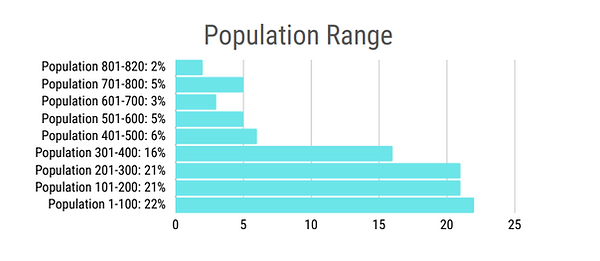
5.0 Findings:
5.1 How many schools and educators are engaged with RJE?
A total of 57 responses indicated engagement with RJE in some form. Eleven schools describe their engagement as a whole-school approach, and 48 responses indicate that engagement has been primarily by educators working independently.
This individual initiative is not surprising, given the approach to implementation in the province. It is encouraging to see how that initiative has grown to include substantial whole school engagement and planning for more than a third of the responding schools.
In terms of time spent with RJE, 72% or 41 schools have been engaged with RJE for less than 4 years, 5 have been involved for 5-9 years, and 10 responses indicate not being sure of the length of time engaged. As an initiative, the province is in very early stages.
5.2 How are participants understanding the essence of RJE? The following insights were gleaned from questions where participants could select more than one response. This would allow for various and multiple perspectives from each location and/or group of educators.
Terminology used by schools/educators give insight into how they are understanding the essence of RJE. Respondants primarily reference RJE as relational with impact on the culture/climate of the school. There is some connection to discipline and/or behavior, however, it is not clear if they may be including these concepts in some of the other terms. The data below regarding objectives for implementation shows a heavier emphasis on behaviour, conflict and harm.
RJE as a way of being is further supported with responses that indicate a conscious effort to move it towards a whole school approach (35%) and is also being included in school development plans (41%). This focus may be pointing to a more comprehensive approach than simply zeroing in on RJE as a tool for addressing behaviour and discipline.
The improvement of relationships as an objective for engaging with RJE is significant with more than 2/3 highlighting this. Inherent in this, however, is the desire to address harm and conflict in effective ways—an aspect of healthy relationships.
To further grasp how respondants are understanding the essence of RJE, who educators involve and how they involve them identifies aspects of relational pedagogy inherent in RJE. In a question where participants could choose one response to identify who their primary focus is, 25 say their focus is on students, 23 focus on the whole school, and two indicate their primary focus is on the staff. In terms of parent involvement, of 41 responses, 10 schools have intentionally informed parents.
Finally, in terms of students being invited to take on a leadership role in terms of promoting RJE, 68% or 32 of the responses indicate there has been no effort to engage students as leaders in this capacity, and 8 have provided a limited opportunity to engage.
Combined, these responses show a significant awareness that developing relational cultures is a key outcome of RJE. With over half of responses selecting “whole school” as characteristic of RJE, the reciprocal nature of relationships in terms of care, concern, and responsibility is recognized (i.e. between and amongst adults--educators/administrators/parents and youth/children--students). However, this reciprocity is tenuous as the emphasis for over half of respondants remains on its impact on students as recipients of the approach, and more than half have not engaged parents actively or allowed students to take on a leadership role learning to facilitate circles and problem solve amongst themselves. As education has historically not been designed to be relational in this manner, but rather an opportunity for transmission of knowledge, this is not surprising. These results point to the need for more support and mentoring in aspects of RJE as a relational pedagogy that engages with transformative, engaged relationship amongst adults, children, and youth as well as with curriculum content (i.e. project-based, inquiry-based learning).
Educator comments about what RJE looks like in a school/classroom augment these findings regarding the essence of RJE. Nine comments were submitted. From these, three themes arise:
1.Circle processes are a key way for integrating RJE principles and practices into the regular school day. Comments indicate their effectiveness for developing stronger relationships that are kind, caring, and supportive amongst students as well as between students and the teacher. Circles are used broadly in classrooms for teaching curriculum, for checking in on students’ experiences at the beginning and end of the class period or day, and for class meetings and clarifying responsibilities as members of the group.
2.RJE is also seen to be a means for engaging in difficult situations, resolving conflict between twothree people or large groups, and addressing harm.
3.RJE is identified as informing and impacting adult-adult relationships amongst staff in three of the nine comments.
Other approaches/programs that participants identify as supporting or complementing RJE are predominantly centred around Social Emotional Learning (SEL) concepts. School-wide positive behavior supports (SWPBS), an approach promoted by the Department of Education and NLESD beginning in 2006, is mentioned only twice as being supported by RJE. As such, educators in NL appear to recognize the foundation of RJE as being different than SWPBS—relational and not behavioural.
In summary engagement with RJE in all of these responses, points to:
-
an understanding that RJE encompasses a whole school culture and way of being, rather than only an approach or practice to curb and manage student inappropriate behavior.
-
a beginning effort to implement RJE in schools beyond individual teacher initiative.
-
an awareness that parents need to be involved in the initiative;
-
a lack of awareness of the role students can take in leading their peers to a restorative justice way of being indicating educators are grappling with moving from a position of ‘social control’ to one of ‘social engagement’ where they are guides and co-learners with students.
5.3 What needs are identified for stronger engagement?
Respondents were asked two open-ended questions that identified (1) barriers to more fully engaging with RJE and (2) needs for thriving. As expected, the responses are closely tied together. Twenty-eight comments submitted indicated barriers, twenty described needs.
One aspect of support for implementation that is encouraged, but not formalized through the various professional learning opportunities over the years, is mentorship. To gauge if participants had picked up on mentorship as a relational means for promoting RJE, one question was allocated for this, “Is mentorship a part of your schools’ plan for engaging more fully with RJE?
Forty-eight responses indicate that there is significant awareness of its potential.
Comments augmenting these responses demonstrate that educators involved are eager to share with their peers what they know through sharing of resources and ideas, modeling, and demonstrating various practices.
5.4 What is the interest for continuing? Interest for continuing is significant as evidenced in 15 comments received when invited to share any other details. Most describe positive experiences and an eagerness to continue:
-
“We look forward to continuing and expanding our practices.”
-
“It makes a huge positive difference in terms of the school climate and helps to keep behavior issues at a minimum. Students have such strong relationships with each other and staff members, and there is a lot of trusts.”
-
“We are learning and growing in this area… we believe it to be a worthwhile process and are working towards educating ourselves so we can implement it appropriately.”
-
“We have done very little; about three teachers have some engagement with it, it would be ideal to build this culture.”
-
“Our experiences with restorative justice practices have been very positive this year, and the classes selected at each grade level to start were very receptive.”
-
“Been extremely positive, with less conflict in the school and a great place to work.”


6.0 Summary and Recommendations
6.1 Summary
In summary, though a small percentage of NL schools (21%) participated in the study, it is encouraging in that this confirms RJE is present in NL in all geographic areas and is applicable for all ages, school sizes, and locations. This engagement has come about primarily through the advocacy of individual educators who engage with it in their own contexts as well as the district Safe and Inclusive Schools (SIS) Itinerants whose role it is to support implementation of the Department of Education’s Safe and Caring Schools policy. As the SIS itinerants had received professional learning from Relationships First through support of the Department of Education, this included modelling and coaching for a relational approach for transforming the culture of schools and classrooms (See Appendix C for details) and Relationships First Consortium professional learning opportunities. Most schools have been engaging with RJE for less than 4 years and most highlight its importance for improving relationships. Nurturing healthy relational school and classroom cultures is the primary objective of educators who choose circle dialogue processes as a key practice; however, understanding the depth of mutual reciprocity in relationships seems limited. This is evident as addressing harm and inappropriate behaviour are also priorities for engaging with RJE and there is little initiative for students or parents to be involved as advocates and participants in leading the practices. Barriers and needs coalesce around the need for more opportunity and consistency of messaging and practice for healthy growth of the approach. Funding, time, and prioritizing RJE by district and department leaders are seen as ways to ensure these are provided. There is s definite desire for continuing to advance RJE amongst all respondants to the survey.
6.2 How significant is RJE traction in NL?
This survey set out to answer the question: How significant is RJE traction in NL? From the results, we can conclude that traction is evident. Though 2% of the respondents indicated they are not engaged, 21% of the 271 schools in the province indicate that they are informed and engaged with its principles and practices to the extent that they felt compelled to complete the survey when invited. In addition, responses indicate an understanding that RJE is known as a way of being, is beneficial when implemented as a whole school endeavor to enhance relational school culture rather than one ‘tool’ of many in their educator collection of practices to address student behavior—a common perspective in jurisdictions beyond NL.
The implementation and sustainability of new approaches in education are complex, with many efforts earning the title of “flavor of the month/year.” When change involves all aspects of the fabric of schooling as RJE does, complexity is multiplied, and adjustments are expected to be much slower. To ensure it did not become the next fad in education, the introduction of RJE in NL was grounded in research indicating that sustainability relies on:
-
educators being invited to engage and lead in educational change rather than mandated to change;
-
educators as “transformative intellectuals” (Giroux, 1988) having the capacity to consider, engage, and promote ways of being in the classroom/school that help them to engage in deep learning experiences.
-
change that depends on (re)considering, (re)committing to or rejecting beliefs and values inherent in educator practices;
-
directors and administrators encouraging and supporting educator autonomy (Mitchell & Sackney, 2011).
In terms of effective professional development, what this survey makes clear is that engagement and growth as initiated from the ground-up is effective and well-understood where it exists. Educators committed to its growth in their personal practice, their schools, and the province are to be highly commended for their advocacy and engagement with RJE.
6.3 Recommendations
The foundation is strong; the interest is high for engaging with RJE. Commitment to providing support and resources from the larger system is now identified by educators in NL as necessary to solidify the work that has been done. The time is right for implementation from the ground-up to connect with support from the directors, departments, and districts of education in the province. This can come in various forms:
1.Policies developed by and resources provided by the Department of Education;
-
A revised Safe and Caring Schools Policy that promotes a holistic relational, restorative justice ethos in schools with clear directives and expectations for engagement would encourage schools to engage explicitly.
-
Given the holistic nature of rje, effort to consider all other education practices and frameworks within the structure of RJE will create and strengthen a more cohesive education vision, i.e., curriculum, Indigenous education, Comprehensive School Health, Social Emotional Learning, multicultural education etc.
-
In regards to resources, much of the groundwork is already in place, and has resulted in significant educator and student engagement. As a result mentoring, and support for this approach along with funding for this project is not onerous compared to other initiatives. Outside expertise is not required or recommended other than for consultative support from time to time; resources, human resources are available within the province, the system, and the schools, and RJE is an approach that requires little in the way of physical resources;
-
The recent revised Education Ministers mandate indicates growing support from the Department of Education which has been formalized, as evidenced in the recent directive (April 15, 2021) the Premier has given to the Minister of Education in their mandate letter:
“I ask that you work with the expertise established at Memorial University to enhance teacher training in restorative justice principles and work to implement these principles into all our province's schools. These actions will help nurture healthy relationships built on foundational respect for all members of the school community and support the development of policies and practices that reinforce inclusive behavior.” (Italics added)
2. Intentional time and guidelines for implementation by districts/schools; The cohort school model of implementation in the province, which is being used with small groups of schools, is available and ready to be launched for all interested schools when the appropriate resources of time and professional learning become available. Educators and Itinerants are ready when schools and districts officially respond to the Dept of Ed mandate;
3. Graduate and undergraduate course development at the Faculty of Education. Graduate students are requesting courses to follow the introductory course provided, ED 6463 Relationships First: Rethinking Educational Engagement. A certificate or diploma program would be well-received; Undergraduate students are introduced to RJE informally through a few of their courses where their instructors are aware of its principles and practices. Now that there is significant awareness of and interest in RJE in the province’s schools, an intentional course and/or approach is necessary for pre-service teachers.
6.4 A Final Important Recommendation
Along with the findings reported on, there is one very important thing that has come to light in the nine years of this work, both locally and internationally: the lack of engagement and collaboration with Indigenous leadership that has taken place within the field. Though there has been an acknowledgment of the field’s indebtedness to Indigenous knowledge and ethos, action beyond this in the form of collaboration and consultation has been limited. At this point in history, as more and more unmarked and mass graves of children are being identified on former residential school properties in Canada, nonIndigenous advocates for RJE must not journey alone in encouraging schools to nurture relational cultures. RJE, nor education & schooling itself will be sustainable in a western, liberal, individualistic framework that most North American schools are grounded in. NL RJE advocates are becoming more conscious of the connection to reconciliation and healing among the Nations (Saleh, 2020). To truly work within this spirit, however, any plans for moving forward in the province need to be steeped in collaboration with and guidance from Indigenous elders, educators, and community members. As such, the current materials being promoted and used in schools will need to be updated/revised:
-
The Relationships First: Implementation Guide by D. Vaandering and D. Voelker;
-
Circle Forward by Caroyn Boyes-Watson and Kay Pranis (current books in circulation will need to acquire the supplement: Moving toward racial equity in schools—starting with the adults.)
-
Little Book of Restorative Justice in Education by K. Evans and D. Vaandering to be supplemented with Little Book of Race and Restorative Justice by Fania Davis.
7. Conclusion
The introduction of RJE to NL came at a time when other jurisdictions across Canada, the US, and beyond had been working to implement this approach and/or way of being for approximately a decade. In response to those experiences which had been found to be somewhat effective but limited, the invitation for engaging with the holistic, ground up approach was extended to a small group of educators in NL to explore (a) if the sustainable implementation of RJE could be initiated from the ground up and (b) what could be learned about the implementation and sustainability of RJE from the NL experience.
This report is significant in beginning to answer both of these questions. Time will tell if sustainability is possible when initiated in this manner. In regards to what can be learned from the NL experience, along with the details in this report, the next months and years will reveal how the engagement of educators in classrooms and schools and directors of education overseeing the institution come together to work towards educational transformation.
Appendix A: Survey Questions
RJE in Newfoundland and Labrador Schools
--an overview of engagement
Survey Questions
INSTRUCTIONS: Please complete all the following questions that pertain to you/your school. Feel free
to skip any questions you do not feel comfortable or able to complete.
NOTE: please substitute any terminology your school uses for “RJE” when reading each question. (i.e.
restorative approach, restorative practice, restorative discipline, relationships first, etc.)
Appendix B: Email Recruitment Letter
Dear ….
My name is Dr. Dorothy Vaandering, and I am a faculty member in the Faculty of Education at Memorial
University of Newfoundland. I am conducting an on-line survey research project called Restorative
Justice Education in Newfoundland and Labrador Schools--An Overview of Engagement along with Dr.
Rosemary Ricciardelli from the Department of Sociology at MUN.
This provincial study is being conducted to understand the current engagement of educators and
schools with Restorative Justice Education (other terms used may be: restorative practices, restorative
approaches, restorative discipline, relationships first, …).
We are contacting you to invite you to participate in this online survey in which you will be asked to
complete various multiple choice and short answer questions. If your school engages with restorative
justice education in any way, participation will require approximately 10 minutes of your time. If
you/your school is not involved in restorative justice education in any way, we invite you to complete a
small segment of the survey that should take about 1 minute of your time. The survey is to be
completed on-line and will be available to you from any computer.
If you have received this invitation and are not currently employed or involved in a school in NL,
we request that you not fill in the survey.
If you are willing to participate in this study, please click the link below to access the online survey.
Here you will find a short introduction to the study and details regarding your consent for use of the
data you provide. The survey is completely anonymous, with an option to provide your contact
information that will allow us to send you the study results later in 2020. This contact information will
not be connected to the responses you give.
If you have any questions about this project, please contact me by email at dvaandering@mun.ca or by
phone at 709.864.3266.
Thank-you in advance for considering this request. Your input will help us plan for future engagement
with restorative justice education in the province.
Dorothy
Dr. D. Vaandering
The proposal for this research has been reviewed by the Interdisciplinary Committee on Ethics
in Human Research and found to be in compliance with Memorial University’s ethics policy. If
you have ethical concerns about the research, such as your rights as a participant, you may
contact the Chairperson of the ICEHR at icehr.chair@mun.ca or by telephone at 709-864-2861.
Appendix C: Beyond the survey summary
The foundation that was laid in August 2012 with 17 participants 8 different school was the start of all
that this study reports on. What follows is a brief overview of trajectory of that growth and the
interconnection that had with the Dept of Education and various stakeholders in the community.
-
In a Synergy Session hosted by MUNL’s Harris Centre to which a wide variety of representatives
from institutions serving/advocating for youth were invited, the participants of the 2012 summer
institute shared details of their experience and its impact on their roles as educators. Over 40
people attended, and from this, an invitation was extended to attending organizations to become
part of a Consortium of partners committed to and advocating for relational, restorative justice
institutional cultures that served youth. Seven responded and Relationships First: Restorative
justice in education Consortium of NL was founded. Included in the response were Department of
Education, NLESD, NLTA, St. Bonaventure’s College, Thrive, Violence Prevention-Avalon East,
Turnings, Provincial Advisory Committee on the Status of Women. Since then, the RNC and The
RCMP have also supported the work and have representatives on the Advisory Board. This
Consortium became a visible presence in the province, and awareness of RJE grew;
-
Accelerator Funding in 2016 allowed for research to assess whole school implementation of RJE in
two schools where 2012 summer institute participants worked in the St. John’s area. From this
experience, more educators became involved and aware and we could determine the needs for
whole school implementation.
-
The Department of Education Safe and Caring Schools Department seconded a 2012 summer
institute participant as a consultant. In this role, the Department of Education was made aware of
its very brief reference to restorative justice as a way to address inappropriate student behavior in
its 2013 Safe and Caring Schools Policy, but only as a way to address inappropritiate student
behaviour. To deepen awareness of a more comprehensive understanding of RJE, in 2016 eight
days of professional learning by Relationships First was provided to a group of 14 safe and caring
schools and inclusive education itinerants whose role it is to help schools implement policy
directives. Response was positive, and, in their roles, they not only promoted the use of RJE
principles and practices in the province’s public schools but also began to use these as their way
of being in their engagement with schools. Turn-over within the SIS itinerant positions is high, and
the following year half of the group had been reassigned. However, those that remained mentored
and supported their new peers and the Department of Education provided support for 3 days of
professional learning. This support from the Dept of Ed, when coupled with a growing number of
educators engaged in RJE in their classrooms and schools, resulted in significant growth of
awareness of the positive impact this RJE way of being could have in a school. However, what is
important to remember is that throughout this time, an official mandate re RJE or resource support
on the part of the Department of Education or the NLESD did not occur until the most recent
provincial election (see Recommendations on p.15).
-
Educators and schools continued to learn of the potential of RJE from their peers. Professional
learning opportunities offered by Relationships First were provided in some summers and when
requested by individual schools. In 2019, the SIS Itinerants were committed to promoting it further
and proposed to the NLESD a cohort model of implementation as recommended by RF-RJE.
Support was approved (though still not as an official mandate), and schools were invited to
become part of a cohort that would follow a three-year implementation model. On the Avalon, 24
schools applied, nine of which were accepted. On the West Coast and Central, 12 schools applied,
and six were accepted. This interest is significant as an application required commitment by a
team of 4-5 educators from the school that included an administrator. This was very hopeful.
However, once again, SIS Itinerant turnover, retirement of a few key directors, time limitations, and
then the onset of the pandemic have all but halted this initiative.
-
MUNL’s Faculty of Education offers a graduate course in RJE once a year. Out of this, several
significant research projects have emerged demonstrating the impact of and effectiveness of RJE
in the province (See Appendix D for a list of theses and projects).
Though all of this is very hopeful and speaks clearly of the effectiveness of grassroots
implementation, province-wide growth has likely neared its limit. Providing ongoing
professional learning by educators or itinerants for each other is not reasonable given the
high demand and the reality that time and resources are currently not allotted for by the
districts or Department. Ongoing professional learning by the researcher supported by
research grants or the organization Relationships First: Restorative Justice in Education NL
Consortium that relies on research funding cannot be expected for the whole province with
the resources it has
Appendix D: Theses, Projects, Reports, Publications arising from the NL experience:
Masters Projects & Theses:
Boluwade, Bukola (2018). The Dynamics of the Learning Circle in High School: Teacher and Students in
“Equal Partnership” (Masters Thesis)
Clarke, Courtney (2019). Investigating the Use of Restorative Justice Circle Process in Individualized
Education Plan Meetings (Masters Thesis)
Edokpayi, Omoregie (2018). A Paradigm Shift through Talking Circle: A Narrative Study to Investigate
the Impact of RJE on Students after Completing an Introductory Graduate Course in RJE.
Lu, Min (forthcoming). “The Impact of COVID-19 on Teachers’ Restorative Justice in Education (RJE)
Practice in Newfoundland and Labrador (NL)."
McGettigan, Danielle (forthcoming). “Impact of K-12 Schooling on Incarcerated People in Newfoundland
and Labrador”
Pardy, Margaret (2018). Relationship building at Sheshatshiu Innu school. (Masters Project)
Power, Erin (2014). “I believe in inclusion but...”: A critical exploration into teacher beliefs and attitudes
around inclusion. (Masters Thesis).
Saleh, Tina (2020). RJE and social dynamics in the classroom. (Masters Thesis)
Wright-Cameron, Taneisha (2021). RJE Principles and Practices: A Professional Learning Guide Booklet
for Grade 9 Form Teachers to be used in their Form Time with Students to Create, Nurture, Repair, and
Transform Relationships geared at addressing School Violence Issues. (Masters Project)
Researcher Publications/Presentations
vaandering, d. (April 2021). Radical Love or Recolonization: Why Theory Matters. Relational Schools
World Conference. https://www.youtube.com/watch?v=f7FaThGvFoo
vaandering, d., Evans, K. Wilson, S., Bowen, S. (April, June 2021). Interrogating Whiteness in RJE.
Relational Schools World Conference and Eastern Mennonite University Conference.
vaandering, d. (2020). At this time; Now, NOT later (blog series). Relationships First.
Evans, K. Morrison, B. & Vaandering, D. (2019). Critical Race Theory and RJE in Listening to the
Movement: Essays on new growth and new challenges in Restorative Justice, Wipf & Stock Publishers.
https://zehr-institute.org/publications/listening-to-the-movement/
Vaandering, D. (2019). “Too much changing has happened to go back”: Professional
Development, Paradigm Shifts and Poetry. Contemporary Justice Review.
Vaandering, D. & Voelker, D. (2018). Relationships First Implementation Guide: A Holistic,
Whole-School, Responsive Approach. Self-published.
Vaandering, D. (February, 2017). Nurturing dignity and interconnectedness for all. Premier’s
Taskforce submission on behalf of Relationships First: RJE NL Consortium.
Vaandering, D. (February, 2017). Nurturing dignity and interconnectedness for all. Premier’s
Taskforce submission on behalf of Relationships First: RJE NL Consortium.
Evans, K. & Vaandering, D. (2016). The Little Book of Restorative Justice in Education. New York:
Skyhorse Publishing.
Vaandering, D. (2015). Critical relational theory. In B. Hopkins (Ed.), Restorative Theory in
Practice: Insights Into What Works and Why. London: Jessica Kingsley Publishers.
Vaandering, D. (2014). Relational restorative justice pedagogy in educator professional
development. Special Issue: Curriculum Inquiry 44:4. Editor: Kathy Bickmore.
Vaandering, D. (Spring, 2015). Living justly: How restorative justice nurtures our communities.
Newfoundland Quarterly, 107 (4), p. 36-39.
PART 5: A Brief History of Restorative Justice in NL
Restorative Justice in Newfoundland and Labrador:
Ongoing Effort Amidst Challenges
dorothy vaandering; Catherine Ann Kelly
Newfoundland and Labrador (NL) has long been interested in and involved in restorative justice. Along
with committed, ongoing engagement with restorative justice principles and practices in Indigenous
communities for generations, various non-Indigenous initiatives have occurred since the 1980’s.
However, limited, previous government initiatives have not taken hold, and to date, there are no specific
restorative justice legislation or policies in government. The current administration is signaling a shift
with some support for community organizations engaged with restorative justice and an emerging
provincial program, Community Justice Connect. The reasons for this are unclear. What follows is an
overview of how the province’s history, geography, population distribution, and economy may have
contributed to the inconsistency in understanding restorative justice and the availability of restorative
justice services over the years. Past initiatives are then explained. Finally, recently renewed efforts in
the areas of education, community, human rights, and the judiciary are described, illustrating a more
cohesive engagement with restorative justice that involves collaborative efforts between Indigenous
and non-Indigenous peoples.
1.Introduction
Newfoundland and Labrador’s (NL) historic and contemporary experience with restorative justice is
best understood when considered from both Indigenous and non-Indigenous perspectives. Indigenous
peoples have engaged with principles and practices that are similar to what is now called restorative
justice for centuries, while non-Indigenous Western initiatives began to take shape in the early 1980s.
Each iteration has occurred independently within a local/regional context with differing degrees of
success and sustainability. NL’s political and social history influences this reality. Looking ahead,
consistency and growth will require conscious attention to the population’s varied histories of harm
related to colonization, racism, and religious abuse.
NL comprises two parts: Newfoundland, the island, with approximately 506,000 people, and Labrador,
the mainland, with approximately 32,000 people (Statistics Canada, Table 17-10-0009-01). The province
consists of many small coastal communities and a smaller number of inland communities. NL has one
city of over 100 000 people (St. John’s 112,000), and six areas (two cities and four towns) with
populations between 10 000 and 30 000. Its vast land area (400,000 km2) and small population, make
it challenging for the government to provide equitable services for its citizens.
The first European contact in North America that opened the way to colonial influence occurred in 1497
with the arrival of Jaques Cartier on the east coast of the island of Newfoundland. By 1763, the island
and the mainland portion of Labrador were governed by Britain. In 1824, it became an official British
colony, until shortly after WWI during which NL substantially supported allied
forces suffering great loss and debt that Britain would not forgive. To provide stability, Britain
reinstated more direct governance and appointed a Commission of Government. This continued until
after WWII when, through a referendum vote, NL became the 10th province of Canada. Under British
rule, immigration of Irish, Scottish, and British gradually increased while Mi’kmaq, Beothuk, Innu, and
Inuit Peoples were considered irrelevant and ignored in any decision-making. The horrific
consequences of colonization embedded themselves in provincial identity. When NL joined
Confederation in 1949, 82 years after Canada's establishment, the premier explicitly excluded
Indigenous peoples from the terms of the union by absorbing all people in the province into general
citizenship. By declaring the province had no Indigenous peoples, these populations were left to suffer
the devastation of resettlement and land theft without compensation that other Indigenous populations
in Canada received. In 2023, this injustice against Indigenous nations has not yet been acknowledged
or rectified officially. However, through their own advocacy, each Indigenous nation has been
recognized and is currently engaged in various negotiations with federal and provincial authorities
regarding land claims and self-government.
Religion played a significant role in the settlement of NL, with Catholicism exerting particular influence,
followed by Anglicanism (Rollman, 1999). Provincial leaders were often prominent Catholics or
Anglicans, and attitudes of superiority perpetuated by the Doctrine of Discovery were significant.
Though religious commitment came with a substantial attitude of charity and care, it also embodied
and entrenched hierarchical structures and punitive and adversarial systems. Denominational schooling
began with settlement and continued in the province until 1997. Notably, the Catholic-run Mt. Cashel
orphanage/school in St. John’s operated from 1898 to 1989 and became infamous in the late 1980s for
disclosures of sexual and physical abuse. Research regarding the five other residential schools in the
province similarly exposed the unconscionable treatment of students (Proctor, 2020). Reports of
mistreatment of children, youth, and adults in other state, church, and academic institutions remain
common to the time of this writing. As a result, the cultural milieu towards leadership, even in 2023,
reverberates with mistrust (Bowman, 2016; Proctor, 2020; McKinnley, 2021).
This is the context within which efforts to implement and sustain restorative justice occur in NL. What
follows is a brief description of how Indigenous justice is understood, how Indigenous communities
were impacted by Western systems, and how two early non-Indigenous initiatives were making efforts
at making systemic change.
2. History and Development
2.1 Indigenous Justice over the centuries
Indigenous First Nations in NL include Beothuk and Mi’kmaq on the island (Newfoundland ) and Innu
First Nation and Inuit on the mainland (Labrador). Recent research has refuted inaccurate historical
records that suggest the Beothuk are extinct (Aylward, 2014). Each Nation had its own system of
government and justice prior to contact with settlers, with elements of these systems still remaining
today as recorded in recently published literature (Joe & O’Neill, 2021; White, 2023, Penashue, 2019).
Indigenous justice differs from Western justice in that it does not seek a universal approach across the
various nations (Youngblood Henderson & McCaslin, 2005:5). However, the approaches all share a
common objective for healing and reconnection. The Mi’kmaq Nation comprises two federally
recognized bands, Miawpukek and Qalipu, along with various distinct Mi’kmaq communities throughout
the province, while the Innu Nation has two distinct communities in Labrador. Traditionally, each
community approaches justice relationally, guided by elders, various ceremonies, and community
Circles. The Inuit in Nunatsiavut and NunatuKavut are currently exploring and reconnecting with
traditional practices. Past practices included Elders addressing harm through conversations with the
person responsible. If there was insufficient change, the community was informed, and the individuals
affected could decide on the consequences. This approach was necessary as the person’s family and
community would suffer consequences if the harm was not addressed such as unsuccessful hunts and
damaging weather.
For a fuller understanding, it is critical for settlers and restorative justice practitioners to be very
mindful of perpetuating colonial harm through an assumed understanding of these practices by framing
Indigenous as a monolith. At a minimum, reading books by Indigenous authors to grasp the differences
and similarities in perspectives of Indigenous justice through Indigenous voices, is necessary. Settlers
and restorative justice practitioners need to be very mindful of perpetuating colonial harm by framing
Indigenous as a monolith.
2.2 The impact of Western justice systems in NL on Indigenous Nations
The impact of Western justice systems on Indigenous communities in NL is complex and has
intensified relatively recently. For generations, non-Indigenous settlement in the province occurred
primarily along coastlines, as boats were the main mode of travel. In 1898, a rail line across the island
was completed, which allowed for some access to Indigenous communities. However, they remained
relatively remote until 1969, when the railway was discontinued, and a series of roads became the
primary avenue for traversing the island. Travel on land opened Indigenous communities to more
frequent access to non-Indigenous individuals and institutions. As a result, RCMP, fishing, hunting,
wildlife, and forestry officers, as well as other social service agencies were now able to enforce
regulations. These federal/provincial regulatory powers led to the charge and arrest of the Mi’kmaq on
the island, and the Innu and Inuit on the mainland for living off the land, practices that had been integral
to their way of life for centuries (White, 2021; Penashue, 2019). They were processed through a court
system where neither group understood the other’s cultural ways. Many men and women ended up in
prison or had their gear confiscated, and mothers, grandmothers, Elders, and children had no food
security. Hunger and poverty were rampant. Army bases near Stephenville and Goose Bay resulted in an
influx of men living close to Indigenous communities. Rape of women and children was common. Many
children were removed from their homes by social services. Communities were decimated (White, 2023;
Penashue, 2019).
Indigenous peoples developed a fear of law enforcement, courts, and prison while their Indigenous
justice systems were no longer viable or available. Their suggestions for using the different approaches
in conjunction were rejected.
Since the 1990s, leaders from the Mi’kmaq communities of Miawpukek First Nation and Flat Bay Band
in Newfoundland, as well as Innu communities of Sheshatshui and Natuashish in Labrador have tried to
collaborate with non-Indigenous judges and lawyers to help their people avoid the harmful cycles
perpetuated by incarceration. Despite each community having alternative approaches, the Western
legal system still dominates and takes precedence (Youngblood Henderson & McCaslin, 2005; personal
communication with various Indigenous Leaders).
2.3 Non-Indigenous Restorative Justice Initiatives
2.3.1 Family Group Decision-Making Project
From 1992 to 1999, Joan Pennell and Gale Burford, two social work professors at Memorial University,
conducted innovative research in child welfare and domestic violence. Rather than social agencies
making decisions for families, a restorative justice approach that empowers families to decide about
the needs of their children or young relatives called Family Group Decision Making (FGDM) was
introduced. FGDM recognizes that those most closely connected to the family are best able to support
them through difficult times. Public and community agencies are significant because they are available
for support when needed. FGDM relies on the strengths and wishes of the family; it is not a mediation
program or a family reunification program (Pennell & Burford, 2000).
This project was not only provincially unique but was groundbreaking internationally as evidenced by its
prominence in social work literature. Many national, provincial, community and Indigenous partners
contributed to the $831,135 of funding that supported this initiative. The work was conducted in three
distinct communities–urban (St. John’s), rural (Port aux Port Peninsula), and Inuit remote (Nain). Its
primary purpose was to test “if the FGDM model could eliminate or reduce violence against child and
adult family members and to promote their well-being” (Pennell & Burford, 2000: 137). The results were
significant, with participants indicating increased family unity, increased safety, reduced maltreatment,
and declining abuse of mothers/wives. It also recognized the potential for change in how service
providers and community members responded to family crises which continues to this day (2000: 153;
Allan, et al 2020).
2.3.1 Community Mediation Services
Community Mediation Services (CMS), a non-profit organization, served NL from 1995-2010. It was
initiated in October 1994 by Marvin McNutt, Ken Templeton, Carolyn Hapgood, Jim McSheffrey, Addison
Klassen, Gerta Klassen, John Scolville, and Joan Atkinson to create a Victim Offender Mediation (VOM)
Program for approval under Section 717 of the Criminal Code (CCC) in NL. As an incorporated entity, it
became widely supported by the Mennonite Central Committee and a broad range of qualified and
committed individuals from the government, the Royal Newfoundland Constabulary, the RCMP, all levels
of the courts, the university, and the general public. With the guidance of Winnipeg’s Community
Mediation Services organization, NL began to train facilitators, and within a few years, it had a roster of
24 registered facilitators who had completed 60 hours of extensive training. Its primary roles included:
conflict resolution and restorative justice processes with individuals and groups, knowledge and skill
development within the organization and community, and promoting systems change through conflict
transformation and restorative justice. It served young people and adults in a wide range of conflict
situations including disputes with neighbours, colleagues, and family members. Referrals for non-
criminal issues came through self-referrals and from community stakeholders; criminal concerns were
referred by the Police, Victim Services, Probation, Corrections, and members of the general public who
wanted restorative justice applied. A research study (Collins, 1996) commissioned by CMS compared
the cost of processing individuals in the present provincial criminal justice system to that of
Community Mediation Services Inc. The study revealed that CMS had nine measures of notable
advantage over the provincial system, including in-session time, number of appearances, expediency,
out-of-session time, in-session cost, out-of-session cost, total cost, the total time for all involved, and
time to fulfill agreed upon conditions. In 1999, CMS conducted a three-month pilot project with
enthusiastic support from the Royal Newfoundland Constabulary, which saw 73 cases involving a wide
range of police called-in disturbances that were successfully addressed outside of court. Despite this
evidence, though it was anticipated that restorative justice cases would increase and be the main work
of CMS, growth did not materialize as anticipated as insufficient funding and lack of structural support
from the NL Department of Justice dwindled for reasons not clearly identified. In response, CMS began
to focus on promoting restorative justice through community education, and peer mediation in schools.
From late 2000 until 2002, CMS went dormant, until renewed funding from MCC allowed CMS to hire a
full-time executive director, Scott Morton-Ninomiya. From 2002-2007, CMS increased its advocacy in
government, and in 2007, the executive director became the adult justice manager/restorative justice
coordinator in the Department of Justice. Volunteer personnel signed up for CMS, and with official
representation in government, the hope and potential were high for incorporating restorative justice
possibilities in the judicial context as based on the Winnipeg Mediation Services model. However, after
the retirement of critical advocates within the government, Department of Justice support ended, and
the restorative justice co-ordinator position was eliminated in January 2010. After this, CMS could not
sustain its motivation or funding, and the organization folded. NL remains one of the few provinces in
Canada to not have an approved VOM mediation program under 717 of the CCC. Judges, corrections
personnel, victim’s services advocates, as well as prosecutors and defense counsel, raise concerns
publicly that this leaves NL operating in an antiquated system of justice that the mainland Canadian
provincial standards have long surpassed.
3. Regulatory and Legal Framework
While community-based justice NGOs and Indigenous groups have done pockets of work over time, the
implementation of restorative justice in the criminal justice system has fluctuated from being active
and inactive between the adult and youth justice systems in NL.
The Department of Justice and Public Safety (JPS) has sole responsibility for adult justice. In 2007-
2010 (see above), it worked to develop an adult restorative justice program. Before it could be fully
planned it was halted. In 2018, the province began operating various therapeutic courts–drug treatment
court, mental health court, family violence intervention court. In 2019, a regional adult diversion
program was initiated in Stephenville and Corner Brook. Designed as an access-to-justice pilot program,
its intention was to address the long wait times for cases to be heard in court by diverting them to
informal proceedings. JPS acknowledges its commitment to adopting restorative justice principles
through these developments (NL Government, 2019). However, beyond this, specific restorative justice
practices or programs are not documented or currently available.
The Departments of Children Seniors and Social Development (CSSD) and JPS share the responsibility
for administering NL’s Youth Justice System. CSSD is responsible for Extrajudicial Sanctions Programs,
community-based sentences, and court-ordered services including open custody. The arrival of the
Youth Criminal Justice Act in 2003, brought significant change. An alternative measures program for
youth is being administered by the Coalition for Youth Justice Committee and funded by RCMP, RNC,
Department of Children, Seniors and Social Development (CSSD), and Crown Attorney's Office. It
coordinates, trains, and manages twenty youth justice committees in NL.
Sporadic engagement with restorative justice has not yet led to specific legislation in NL though some
indicate that alternative dispute resolution and therapeutic courts have built options for it into existing
legislation. Provincial examples include: in 1998, the Child, Youth and Family Services Act (1998) was
amended to allow social workers to use alternative dispute resolution to settle child custody cases; The
Human Rights Act 2010 provides for the resolution of complaints through section 26(1). Federally,
examples include: The Constitution Act, (UK) 1867, 30 & 31 Victoria, c 3.; Criminal Code, RSC 1985 c C-
46.; Youth Criminal Justice Act, SC 2002, c 1.; Corrections and Conditional Release Act, SC 1992 c 20.;
and Public Prosecution Service of Canada Deskbook, 2020, ss 3.8 & 5.4.
In 2018, JPS hosted the Federal, Provincial, and Territorial Ministers of Justice gathering in NL. Here
they endorsed “Restorative Justice - Key Elements of Success,” and committed to increasing the use of
restorative justice from 2018-2021. Following this meeting, five locations throughout NL held Justice
Summits where attendees listed the lack of alternative processes as their primary concern. The current
administration has been investing in restorative justice by funding Relationships First NL (RFNL- see
below) and Community Justice Connect (CJC – see below) through the NL Human Rights Commission.
In 2023, the only government-funded program developing and implementing restorative justice is
Community Justice Connect, a program by the NL Human Rights Commission.
4. Programs and Practices
4.1 Current Indigenous restorative justice programs and practices
Several communities in NL are working to establish Healing and Wellness/Indigenous Courts in their
communities. These will be available to Indigenous people and will apply Indigenous Justice principles
that satisfy non-Indigenous court requirements. Funding is being provided both by provincial and
federal grants. Some of these communities have developed specific restorative justice programs that
comply with Federal restorative justice standards to divert cases away from the traditional court
system and keep people out of jail. Others are establishing various community-based justice initiatives
that may or may not reflect or engage with restorative justice principles and practices (Innu,
Nunatsiavut Government). Miawpukek, after extensive consultation with community elders, developed a
community-designed approach to restorative justice in 2001. The program is committed to increasing
community cohesiveness, educating youth regarding the judicial system, and facilitating situations
involving minor crimes that would otherwise result in charges and court procedures. They facilitate
approximately 12 cases per year. Flat Bay has been practicing restorative justice formally since 2004
after they received training from the Miawpukek facilitators. This expanded in 2014 when the RCMP and
Dr. Rosemary Ricciardelli, a Memorial University professor, established the provision of Extra Judicial
Measures for the youth of six Mi’kmaq communities. In 2020, Flat Bay, in collaboration with eight bands
received a total of $801,876 in federal funding through Justice Canada’s Indigenous Justice Program,
the Justice Partnership and Innovation Program, and the Youth Justice Fund to support the
development of a comprehensive restorative justice program that aims at reducing youth contact with
the law and equalizing incarceration rates proportional to the population. Various other federal and
provincial funding initiatives currently and previously allow for Indigenous communities to develop
approaches that will alleviate the over-representation of their members in the judicial system. However,
none of these are specific restorative justice programs as described by Correction Services Canada
(Quinn, 2023; Government of Canada, Justice) First Voice is a coalition of urban Indigenous Peoples,
service providers, and government working together to advance truth and reconciliation in St. John’s,
NL. In 2023 they completed their Community Action Plan, which includes 42 Calls for Change, one of
which, #35, commits to promoting and supporting the availability of restorative justice programs (First
Voice, 2023).
As Indigenous justice systems and programs develop within the Indigenous communities in NL,
changes within the Western judicial system to better serve Indigenous populations are slow or non-
existent resulting in the perpetuation of stereotypes, over-incarceration rates, and culture exclusion. For
example, while the landmark Supreme Court decision that created Gladue reports was decided on April
23, 1999, only one full Gladue report was officially used in 2022. It is unclear what is prohibiting the
full implementation of Gladue in the province, however, according to Bradbury (2022), funding, in-
province resources, and acceptance by the courts of Gladue principles in place of full reports,
contribute.
5. Current non-Indigenous programs and practices
5.1 CJC-Human Rights
Beginning in 2020, the NL Human Rights Commission in collaboration with Relationships First NL (see
next section) developed a restorative justice service for Indigenous, racialized, and religious minority
communities throughout Newfoundland and Labrador, regardless of immigration status. Initially funded
through a $165,000 grant from the Department of Canadian Heritage Anti-Racism Action Program, with
in-kind support from the Government of Newfoundland and Labrador, the program soft-launched in July
2021.
Community Justice Connect acknowledges the diverse and intersectional requirements of Indigenous
and racialized people in Newfoundland and Labrador. The program has two paid staff and 18 volunteer
Community Facilitators who undergo specialized training in restorative justice, anti-racism, anti-
oppression, and anti-colonial approaches. Community Facilitators are primarily racialized and
Indigenous members of the community, and are assigned to cases based on their experiences, training,
and background.
CJC, primarily funded through JPS, is a one-of-a-kind service in NL. Cases are referred directly from
individuals, organizations, or communities or through all stages of the human rights complaint process.
Participants can access CJC by phone, email, or online. At intake, they meet with Facilitators to explore
what has happened and discuss if a restorative process will meet their needs. Services offered include
conflict coaching, support sessions with facilitators to explore options, mediation, circle process, and
indirect communication with other parties.
Human rights complaints can be settled and resolved through a CJC process. The CJC program does
not work with criminal justice matters or with other areas of the justice system. The program is
developing and adjusting to learnings as needed. Smaller projects have been funded through other
groups to develop emerging areas of the program. For example, CJC is researching the possibility and
potential for participants to access legal advice as a part of its team-based approach. Community
Justice Connect also receives cases involving systemic issues affecting communities and looks for
trends in cases to identify systemic issues.
5.2 Relationships First NL
Relationships First NL (RFNL) is a consortium of community and government partners housed in
Memorial University’s Faculty of Education. Founded in 2014, it has focused primarily on integrating
restorative justice into NL schools. Its mandate is to nurture relational cultures in organizations in NL
that serve children and youth. It emerged from a SSHRC-funded research project (2012) that focused on
implementing restorative justice from the ground up by introducing it first to educators rather than
directors of education. Though growth has been gradual, in 2020, through the influence of educators
requesting more engagement with restorative justice, the newly appointed education minister's
mandate letter included a directive to work toward implementing restorative justice principles into all
the province’s schools. A newly revised Safe, Inclusive, and Caring Schools Policy to be released in
2024 is anticipated to be responsive to this mandate to integrate a relational restorative framework. In
2022, the Department of JPS granted RFNL $600,000 over three years to support the growth of
restorative justice in the areas of education, community, and justice.
5.3 Justice and Public Safety
A number of programs are considered to have restorative justice elements but do not fully engage with
Restorative Justice principles or practices. These include Drug Treatment Court (DTC), Intimate Partner
Violence Court (IPVC), Mental Health Court (MHC), and Adult Diversion (AD). DTC is a federally funded
program that was established in St. John’s in 2018, as an alternative approach for offenders with
serious drug addictions, who commit non-violent, drug-motivated offenses.
The Adult Diversion program is a post-charge diversion program for individuals with non-violent
offenses. Established in 2019 as a pilot project in the Western Region of NL, it offers an alternative to
the Western court process. The program provides an effective and timely response to an incident that
encourages individuals to acknowledge and repair harm and provides an opportunity for the victim to
participate in the process. To qualify, individuals may not have a mandatory minimum sentence, must
accept responsibility for the act with which they are charged, and their offense must not relate to cases
of bodily harm, intimate partner violence, sexually violent offenses, impaired driving, or offenses with
child victims. Though engaging with restorative justice principles, these various programs are
promoted primarily as available alternative approaches more so than restorative justice approaches.
6. Current collaborative Indigenous and non-Indigenous Initiatives
Two-Eared Listening for Deeper Understanding: Restorative Justice in NL began as a unique
collaboration between Chief Mi’sel Joe of Miawpukek First Nation and a small group of academics from
Memorial University associated with Relationships First Newfoundland and Labrador. From 2019 to
2021, the group, mentored by Chief Joe, worked together to plan an event where non-Indigenous
leaders in the province’s community, education, and judiciary sectors would come to listen deeply, with
Two-Ears (insights informed by heart and soul), to Indigenous stories of injustice in an effort to better
understand the complexity and practice of what restorative justice needs to be. The three-day gathering
in November 2021 proved to be transformative in recognizing that provincial restorative justice
practices could not be developed without authentic engagement with Indigenous leadership. This was
followed by an event in May 31- June 1, 2023, called The Elders Speak: Two-eyed Seeing and Two-Eared
Listening where the group brought together the originator of Two-Eyed Seeing, Dr. Elder Albert Marshall
and Chief Mi’sel Joe in dialogue for three public events to share the importance of these concepts for
society today. Ongoing events are being held and collaborations are growing as the various worldviews,
beliefs, and ways of being intersect to create a holistic understanding of what justice and balance in
society can be (see: www.twoearedlistening.com).
7. Research: Findings and Gaps
Historically, living conditions in NL have been challenging. To address this, neighbours relied on each
other, and relational ways of living were key to survival. In some ways, the structure, size, and history of
NL communities have the potential to facilitate the development of restorative justice. In spite of the
71efforts to engage in restorative justice over time, in 2023, a consistent or complete record still does not
exist. The few listed above, offer a glimpse but are not representative of the significant work done,
especially in Indigenous communities.
Both the lack of a complete record and formal directives from the provincial government, unfortunately,
reveal that NL has not engaged with restorative justice as other provinces have done. As
implementation is challenging for all jurisdictions, exploring the reasons for NL’s experiences would
inform their way forward and might also deepen the understanding of rj in other places. Emerging from
the details above, answers to the following types of questions may provide ways forward. Are NL’s
challenges connected to: NL’s contentious Indigenous and non-Indigenous relationships? The
historical role of religion in settlement? NL’s date for joining Confederation? The impact of the
exposure of Mt. Cashel's abuse coinciding with NL and Canada’s early engagement with restorative
justice?
The underlying context is multi-faceted, but until specific research is conducted, it will remain unknown.
8. Emerging Opportunities and Innovation
NL may be poised to engage more successfully with incorporating restorative justice formally in spite
of its past challenges. Recent initiatives are hopeful, especially when combined with past and present
restorative justice experiences of both Indigenous and non-Indigenous communities and a cultural ethic
that values relationship and connection. NL is also attuned to the current national discourse that
acknowledges how Indigenous and racial justice are interlaced with restorative justice.
With approximately 20% of the population identifying as Indigenous or having Indigenous ancestry,
there is significant interest in reviving Indigenous justice practices in the Indigenous nations that
are/have claimed national sovereignty. The ties restorative justice has to Indigenous justice are being
recognized and there is ongoing discussion regarding the similarities and differences.
NL is also focused on immigration, and thus the racial and religious demographics, particularly in St.
John's, are changing. Active racial justice and social justice communities (Anti-Racist Coalition of NL;
Social Justice Cooperative NL) are shifting the conversation around justice, with more people calling
for racial and transformative justice.
All of these shifts combined with significant Indigenous leadership, CJC’s direct mandate to serve
marginalized communities, RFNL’s holistic philosophical framework, and the provincial government’s
recent increased funding could be the confluence of strengths needed to make headway. NL has the
opportunity to learn from other jurisdictions in Canada, and by embracing its size and place, it could
create a sustainable provincial approach to restorative justice.
9. Conclusion
A culture shift towards relational, mutual accountability, and justice is built in small moments. There is
no endpoint for this work. Its development will be a living conversation in our province and our
communities. Colonial structures of time and success factor into this discourse. If we are steadfast in
leaning into decolonizing, Indigenizing, racial justice, and seeing each other as worthy, we will slowly
build the trust to keep this work moving forward. All of this requires time, energy, and funding. For a
fuller understanding, it is critical for settlers and restorative justice practitioners in NL to be very
mindful of perpetuating colonial harm by framing Indigenous as a monolith. At a minimum,
commitment to reading books by Indigenous authors will allow for “undoing the first harm” (Valandra,
2022) as we learn of variations and richness of Indigenous justice through Indigenous voices. We also
need to be clear that any success in restorative justice requires funding of long-term (not pilot)
programs with stable infrastructure that provide secure employment. With such on-going investments,
we can slowly build on the work and movements with RJ in NL. Work will be ongoing and require a
commitment for generations.
Note of thanks to: Margaret Cranford who provided insight regarding the history of
Indigenous communities in NL and the many people who were consulted for details for
this article: Gale Burford, Andrew John, Irene Joe, John Joy, Liz Lasaga, Scott Morton-
Ninomiya, Ken Templeton, Judy White.
First written for “The International Encyclopaedia of Restorative Justice. Eds. Ivo Aertsen
& Jennifer Llewellyn. Publishing date: TBA. Used with permission.

References
Allan H., Rauktis M. E., Pennell J., Merkel-Holguin L., Crampton D. (2020). Family meetings as system
reform to address disproportionality and disparities. In Dettlaff A. L. (Ed.), Racial disproportionality and
disparities in the child welfare system. Springer.
Aylward, C. (2014). The Beothuk story: European and First Nations narratives of the Beothuk people of
Newfoundland. Dissertation.
Bowman, M. 2016. Crisis, change and 'the continuous art of individual interpretation and negotiation':
the aftermath of clerical sexual abuse in Newfoundland. Journal of the Irish Society for the Academic
Study of Religions, 3(1), 140-170.
Bradbury, T. (2022). Gladue principle evolving in N.L.: Law requires judges to pay particular attention to
circumstances of Indigenous offenders. Saltwire Press.
Collins, M. (1996). The Cost of Processing Individuals in the Present Provincial Criminal Justice System
Versus Community Mediation Services Inc. for Five Selected Summary Offenses. Study completed for
Community Mediation Services.
Community Justice Connect: Newfoundland and Labrador Human Rights Commission.
https://thinkhumanrights.ca/community-justice-connect/ (Last accessed 21 April 2023)
Federal-Provincial-Territorial Meeting of Ministers Responsible for Restorative Justice: Restorative
Justice–Key Elements of Success. November 2018. Retrieved from:
justice-and-public-safety/ (last accessed 21 April 2023)
First Voice. A Vision for the Future: Our Calls for Change. (February 2023). ISBN 978-1-7387971-2-7.
Retrieved from: https://firstvoicenl.ca/site/uploads/2023/02/Our-Shared-Vision-Single-Pages.pdf (Last
accessed 21 April 2023.)
Government of Canada-Justice:
Government of NL: Population and Demographics.
https://www.stats.gov.nl.ca/Statistics/Statistics.aspx?Topic=population
Joe, M. & O’Neill, S. (2021) My Indian. Breakwater Books.
McKinnley, S. (Jan. 14, 2021). The legal battle over Newfoundland’s infamous Mount Cashel sexual
abuse is finally over. But one of the four plaintiffs didn’t live to see it. The Toronto Star.
https://www.thestar.com/news/canada/2021/01/14/the-legal-battle-over-newfoundlands-infamous-
mount-cashel-sexual-abuse-is-finally-over-but-one-of-the-four-plaintiffs-didnt-live-to-see-it.html
NL Department of Justice and Public Safety (2019). Out of the Silos: Implementing Solutions Together.
Retrieved from: https://www.gov.nl.ca/jps/files/publications-pdf-justice-summit-action-plan.pdf (Last
accessed 21 April 2023).
Penashue, E. (2019). Nitinikiau Innusi: I Keep the Land Alive. University of Manitoba Press.
Pennell J. & Burford, G. (2000). Family Group Decision Making: Protecting Women and Children. Child
Welfare. Vol. LXXIX, #2
Proctor, A. (2020). A Long Journey. ISER Books.
Quinn, E. (2023). Ottawa pledges 1.16 million for justice programs by Inuit government in Atlantic
Canada. Retrieved from: https://www.rcinet.ca/eye-on-the-arctic/2023/01/23/ottawa-pledges-1-16-
million-for-justice-programs-by-inuit-gov-in-atlantic-canada/
Rollman, H. (1999). Religion in Newfoundland and Labrador. Heritage Newfoundland and Labrador.
Retrieved from: https://www.heritage.nf.ca/articles/society/religion.php. Last accessed 22 June
2023.)
White, C. (2023). One Man's Journey: The Mi’kmaw Revival in Ktaqmkuk. Memorial University Press.
Winter, H. (2022) Restorative Justice Schemes in Canada for Criminal Matters. Dalhousie University
Winter, H. (2022) Research Guide Re: Restorative Justice Schemes in Canada for Criminal Matters.
Dalhousie University
Youngblood Henderson J.S, & McCaslin, W. (2005). Exploring justice as healing: Introduction. In
McCaslin (ed.) Justice as Healing (p. 3-9). Living Justice Press.
